

02 · from the workshop
Buy the Bitaxe Naja Duo: 4.4 TH/s at 42 watts
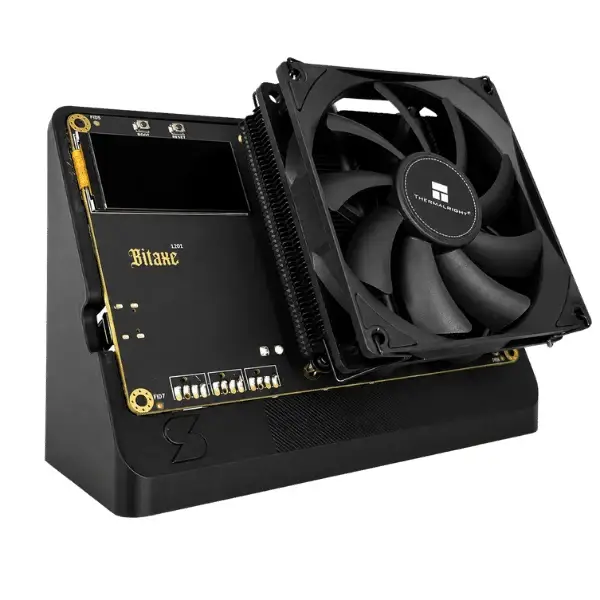
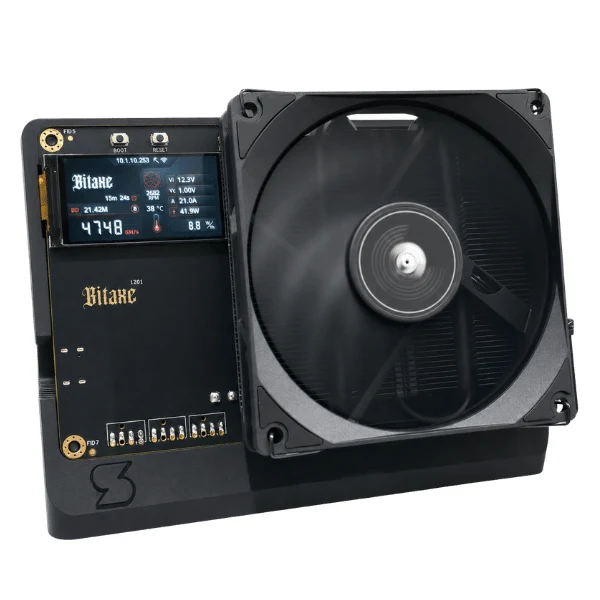
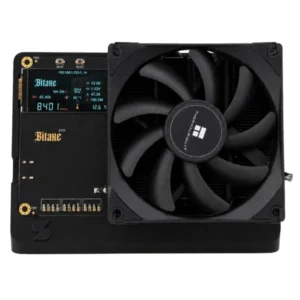
The Bitaxe Naja Duo is the newest open-source bitcoin solo miner in the Bitaxe family, and the first to run on the BM1373: Bitmain's 3 nm chip from the Antminer S23 generation. Together, two of those chips reach about 4.4 TH/s at roughly 42 watts. That is four times the hashrate of a Bitaxe Gamma, for a little more than double the power draw. New to mining? A miner like this takes part in the lottery of the Bitcoin network. Roughly every ten minutes a new block is found, and whoever finds that block receives the full reward. With the Naja Duo you join in from your own desk, without a data center and without the noise of an industrial miner.What makes the Naja Duo different?
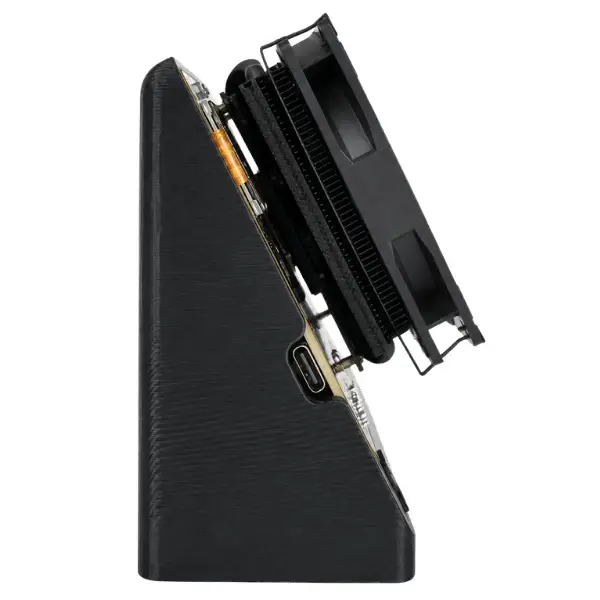
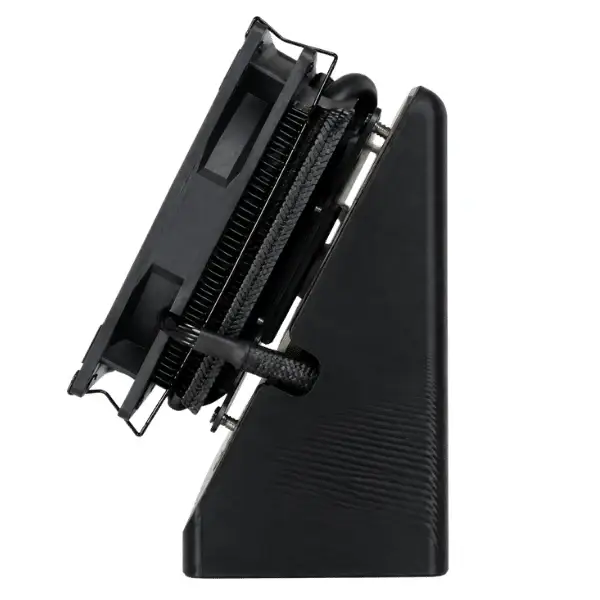
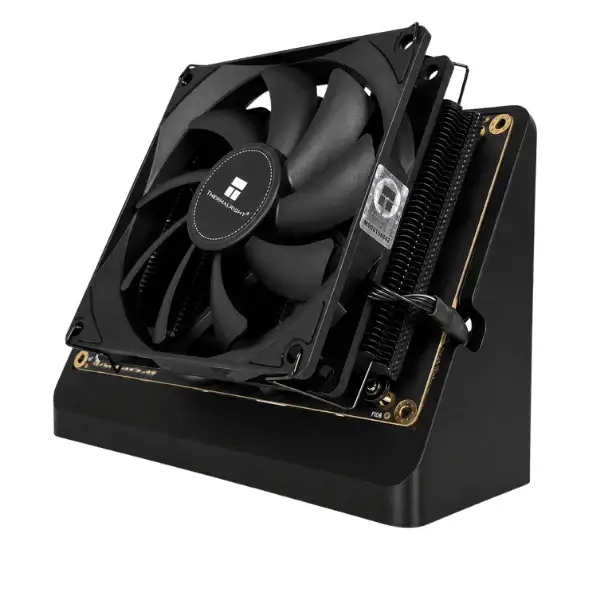
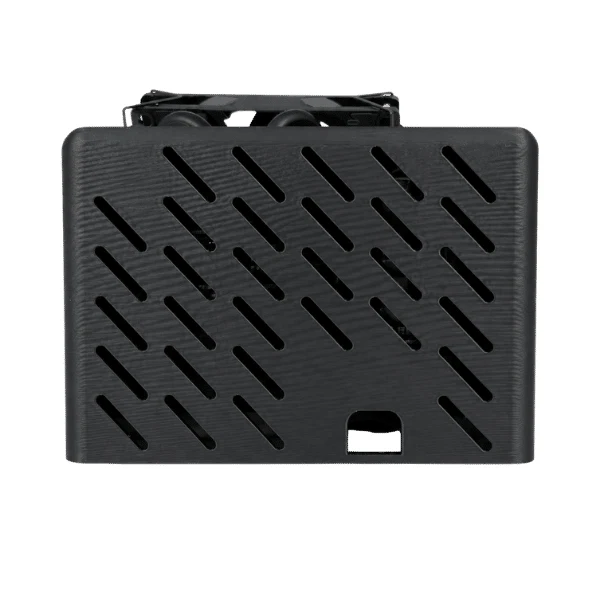
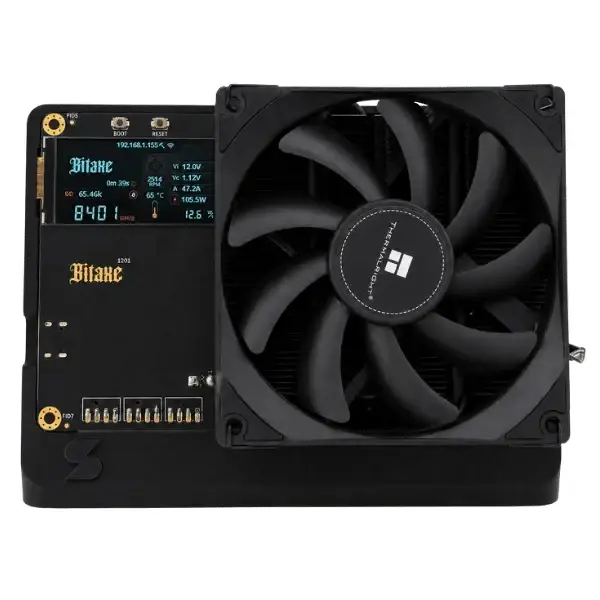
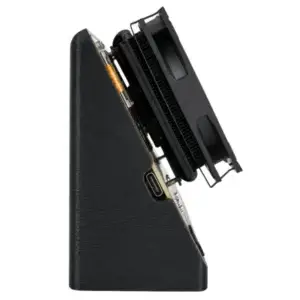
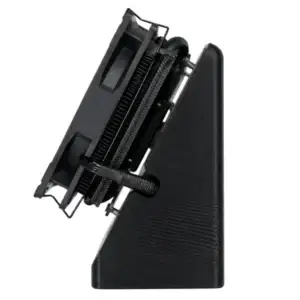
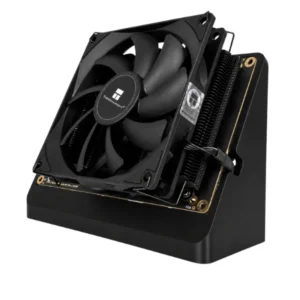
The number that counts is efficiency: how much energy each terahash costs. Out of the box, the Naja Duo sits at about 9.5 J/TH. A Bitaxe Gamma and a NerdQaxe++ both sit around 16 J/TH. So you get nearly the hashrate of a NerdQaxe++ for a little more than half the power. That makes the Naja Duo the first Bitaxe to drop below 10 J/TH. The rest of the design has matured too. Each chip has its own temperature sensor, so the fan and throttling respond to the hottest chip instead of an average. A Thermalright AXP90-X47 low-profile cooler with heat pipes sits across both chips, topped by a slim 92 mm PWM fan rated at up to 22.4 dBA. The 1.9-inch color display shows your IP address, hashrate, temperature and best difficulty at a glance.Honestly: what can you expect?
A Naja Duo is not a money machine. Even at 4.4 TH/s, the chance of finding a block yourself on any given day is very small, although it is four times higher than with a Bitaxe Gamma. If you would rather see a few sats come in regularly, connect it to a pool such as Ocean or Braiins. If you are going for the full block reward, choose solo mining via Public Pool or CKPool. Switching takes a few clicks in AxeOS. Power: running continuously at 42 watts, the Naja Duo uses about 30 kWh per month. That is roughly €9 per month at an average Dutch electricity rate. Overclocked to 8 TH/s, consumption rises to about 92 W, or roughly €19.50 per month.Overclocking to 8 TH/s
In AxeOS you set the frequency and core voltage yourself. The factory setting is 327 MHz at 1,000 mV. The tested upper limit is 600 MHz at 1,120 mV, good for about 8 TH/s at 92 W (about 11.5 J/TH). The included 124 W power supply then runs at roughly 74 percent of its capacity, within the common 80 percent rule of thumb for continuous use. Increase step by step, let the temperature settle after each step and keep an eye on both chips. No two chips are the same (the so-called silicon lottery), so not every unit reaches the same numbers. You overclock at your own risk: damage caused by overclocking is not covered by the warranty.Up and running in five minutes
- Connect the power supply to the XT30 connector and plug it into the wall outlet.
- The miner broadcasts its own Wi-Fi network. Connect to it with your phone or laptop.
- Enter your own Wi-Fi details in AxeOS (2.4 GHz). After a restart, the IP address appears on the display.
- Enter your bitcoin address, preferably a SegWit address starting with bc1q. Use an address from your own hardware wallet, so any reward lands straight in self-custody.
- Choose your pool, save, and the Naja Duo starts hashing.
The numbers side by side
| Model | Hashrate | Power consumption | Efficiency |
|---|---|---|---|
| Bitaxe Supra | about 700 GH/s | about 15 W | about 21 J/TH |
| Bitaxe Gamma | about 1.1 TH/s | about 18 W | about 16 J/TH |
| Bitaxe Naja Duo | about 4.4 TH/s | about 42 W | about 9.5 J/TH |
| NerdQaxe++ | about 4.8 TH/s | about 76 to 80 W | about 16 J/TH |
| Canaan Avalon Nano 3S | about 6 TH/s | about 140 W | about 23 J/TH |




Reviews
There are no reviews yet.