What happens if you’re still using hardware wallet, but you’ve lost your recovery phrase? Then you’ll quickly learn a hard lesson: your wallet is a tool; your backup is the key. Not your screen. Not your app. Not that neat little box in the drawer.
nn
Who searches for Save seed phrase; create backup, you’re usually not looking for a gadget. You’re looking for peace of mind. That makes sense. A seed phrase is the set of 12 or 24 words that lets you restore your bitcoin. If you lose those words, you’ll eventually lose access. If you still have them, you can continue using your wallet on a new device. It’s that simple. And that’s how critical it is.
nn
Anyone who tests miners and hardware wallets looks at backups differently. Paper feels quick. Digital feels easy. But as soon as you factor in fire, water, mold, relocations, and human carelessness, little romance remains. This is exactly why a steel backup for serious self-custody is not a luxury, but mature foundational work.
nn
Table of contents
n
- n
- Why your backup is more important than your wallet
- Paper, steel, or digital: what are the real differences?
- 7 steps to securely stamp your seed phrase on steel
- Steel is strong, but not magical
- Steel does not protect a weak seed
- Stamping, engraving, or tiles: which method suits you?
- The mistakes most commonly made with steel backups
- Where do you store a steel backup without dumb risks?
- Never treat passphrase and seed as the same
- Conclusion
n
n
n
n
n
n
n
n
n
n
nn
Why your backup is more important than your wallet
nn
A hardware wallet protects your keys while you're using them. Your backup protects your access when something goes wrong. Those are two different tasks. Many beginners take care of the first one but forget the second. It's like buying a sturdy front door but putting the spare key in a wet cardboard box.
nn
A seed phrase is usually structured according to BIP39. That is the standardized word list that many wallets use to make key material readable for humans. Those words are therefore not just random notes. They are the summary of your access. You can replace the wallet itself. The seed phrase, you cannot. In fact, as soon as you understand that difference, paper often suddenly feels a lot less reassuring.
nn
Paper is fast. That is also precisely the temptation. You write down the words, fold the sheet shut, and think: done. But paper lives in the same world as coffee, children, leaks, sunlight, moves, and haste. Rationally, that is weak. Emotionally, it feels fine, precisely because it was so little work. And that is often where things go wrong.
nn
A steel-solid backup turns that around. It requires more attention at the start. You have to work carefully, read thoroughly, and then test it. Not sexy, but strong. Bitcoin is the antidote to careless trust in intermediaries. Your backup must demonstrate that same discipline. Otherwise, you’ll have self-custody in theory, but not in practice.
nnnn
Paper, steel, or digital: what are the real differences?
nn
The basic equation is simple. Paper is fast but vulnerable. Digital is convenient but opens up additional attack surfaces. Steel takes a bit more effort, but provides the best protection against many common disaster scenarios. Not against everything, but against a large portion of the mess that happens in real life.
nn
| Method | Brand | Water | User error | Speed | Best effort |
|---|---|---|---|---|---|
| Paper | Weak | Weak | Low when writing down | Fast | Temporary work surface |
| Digital file or photo | Weak | Weak | High through leaks and copies | Fast | Not recommended |
| Steel plate | Strong | Strong | Center during input | Quiet | Long term |
| Tiles or capsule system | Strong | Strong | Medium to high | Quiet | Advanced use |
nn
Digital sometimes seems smart because you think of encryption, backups, and convenience. Only: in practice, that often ends up as a screenshot, note-taking app, cloud folder, or photo in your gallery. Then you haven't made a backup, but an extra copy on a system that is actually connected to the internet. That is the opposite of what you want.
nn
So steel doesn’t win because it’s trendy. Steel wins because it withstands many of the common physical risks better. Water, heat, wear and tear, and the passage of time are annoying, but understandable. A data breach or a compromised phone is much harder to undo. That’s why you see many bitcoiners starting on paper and ending up with steel.
nn
Anyone who wants to look beyond just the backup itself can also check the category afterwards hardware wallets open. A good backup choice depends on how you use your wallet, how much friction you accept, and how often you expect to recover.
nn
7 steps to securely stamp your seed phrase on steel
nn
The title promises seven steps. Here they are. No theater, just a workable sequence.
nn
1. Only create your seed phrase on the wallet device itself
nn
The first mistake often happens right at the beginning. People want to quickly take a photo or put words temporarily in a notes app. Don't do that. Let the seed phrase be generated on the device itself and write it down by hand first on a temporary worksheet. Offline. Calmly. Without a laptop next to you, without a phone above you, without onlookers who have no role.
nn
Check every word and especially the order
nn
A backup with all the right words in the wrong order is simply broken. Many BIP39 words do not look alike, but haste makes everything stupid. So read it back out loud. Number the words. Check whether word 11 is really word 11 and not accidentally line 12. This sounds trivial. It is. But it is precisely at that trivial level that you lose complete access later.
nn
3. Only after that, transfer the temporary paper list to steel
nn
Paper is fine as an intermediate step. Not as a final destination. So use it as a worksheet, not as definitive storage. Only then grab your steel backup and copy the words over one by one. Use the system that belongs to your product. Some solutions work by writing everything out, others by using the first four letters. Do not improvise halfway through because you think you are saving time.
nn
4. Work slowly when punching, engraving, or assembling
nn
A steel backup forgives little. That is simultaneously its strength and its pitfall. Whether you are punch-stamping letters, engraving, or using individual tiles, haste is your enemy. Take a short pause to check after every word. Look not only at spelling, but also at legibility. Will you still be able to decipher it just as easily in five years? Good. If not, redo it before you move on.
nnnn
5. Test your recovery on an empty device
nn
This is the step that many people skip because it doesn't give a dopamine rush. Yet this is the step that pulls your backup from hope to certainty. Restore the wallet on an empty device or on a test wallet and check if everything comes back exactly. Not roughly. Not almost. Exactly. Only after that may you kid yourself that the backup is correct.
nn
6. Do not store the wallet and backup in the same place
nn
Storing a hardware wallet in the same safe as the seed phrase feels organized. It’s also a single point of failure. In the event of a break-in, fire, or nosy family members, they’d only have to find one place. So split those items up. For most people, two locations is a sensible minimum. You don’t need an exotic James Bond-style plan, just diversification.
nn
7. Revise your setup if your amounts, household, or living situation change
nn
The backup that’s good enough today might not be enough in three years. Maybe you’ll have more bitcoin, maybe you’ll have a partner, maybe you’ll move, or maybe you’ll want to better organize your estate planning. Don’t wait until you’re under stress to address these issues. Review your setup periodically. Not every quarter like a spreadsheet fanatic, but as soon as your situation changes noticeably.
nn
Steel is strong, but not magical
nn
This is often where marketing goes wrong. As if steel solves everything. That is too easy. A steel backup protects you better against heat, water, and wear than paper. But if you copy the words incorrectly, put the plate in a stupid place, or mix up your passphrase with your seed, then material alone won't help.
nn
Also pay attention to the type of steel and the design. Not every product is equally well thought out. Stainless steel can be fine, but thickness, fastening, legibility, and the system you use to record words all matter. So the best product is not necessarily the one with the boldest claims. It is the product that you can use with minimal errors and still read back later without interpretation.
nn
If you primarily want to understand the basic difference between wallet, seed, and recovery first, then Storing Bitcoin for Beginners: Here's How to Do It Safely a logical next step. That context makes a better backup choice easier, precisely because you are not just focusing on material, but on the entire recovery process.
nn
Corrosion is also one of those subjects that is often glossed over too quickly. Plain steel can rust. Stainless steel is more resistant, but not invulnerable in every environment. A damp shed, salty air, or direct contact with other reactive materials can still cause trouble in the long run. That is why storage space is at least as important as the choice of material. Steel does not fix a bad routine.
nn
Steel does not protect a weak seed
Steel protects your words against fire, water, and time. Against a poorly generated seed, it does not help.
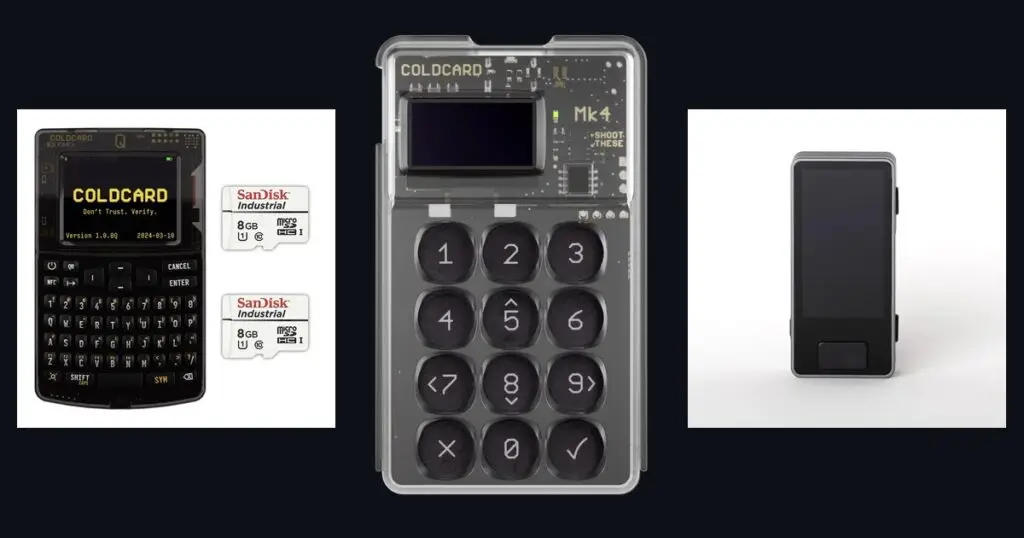
In July 2026, it was discovered that, due to a firmware error, Coldcard had been generating seeds for years with less randomness than intended. As a result, bitcoin was stolen from older models. Some of those seeds were securely stored in steel. That didn’t matter, because the problem lay in the generation of the seeds, not in their storage.
Step 1 above says that you only generate your seed on the wallet device itself. That is still correct, with two additions. First, check that your firmware is up to date, and roll at least 50 of your own dice if your device has that option. Whoever did that back then was not affected.
Find out exactly what happened and what you should do if you have a Coldcard
Stamping, engraving, or tiles: which method suits you?
nn
There are roughly three routes. Stampings with steel stamps or a center punch. Engraving, manually or mechanically. Or a system with loose tiles, strips, or capsules. None of the three is automatically the winner. It depends on your dexterity, patience, and error profile.
nn
Impacts is robust and clear. If you’ve done it neatly, the information remains readable. Downside: you don't correct mistyped letters nicely. So you need to be calm and have enough space. For people who like to work tangibly and definitively, this is often the most down-to-earth route.
nn
Engraving provides more control over shape and neatness. With the right tool, it can turn out clean. Disadvantage: engraving too shallow becomes less legible over time, and some people overestimate how consistent their handwriting or line work remains. Engraving can work well, but only if you execute it seriously.
nn
Tiles or capsules are flexible. You assemble words from separate parts and can correct mistakes more easily during the process. The downside is complexity. More parts, more chance of mixing something up, losing it, or half-fixing it. For advanced users, that can be fine. For beginners, simplicity is often your friend.
nn
So the real question is not: which is the coolest system? The real question is: with which system do you make the fewest mistakes on a quiet evening with no rush? The answer is usually hidden right in there.
nn
The mistakes most commonly made with steel backups
nn
The first mistake is trusting your memory too much. People think they will check the words later or that they will naturally find a missing detail. No. A backup must be independently accurate without you needing to supplement anything with memories.
nn
The second mistake is double storage in an insecure way. So making steel, but also keeping a photo on your phone “just to be safe.” Then you have improved physical security and at the same time added a digital leak. That gets you nowhere.
nn
The third mistake is keeping everything in one place. Wallet, seed, passphrase, purchase receipt, manual. Nice and organized. Until that one place disappears. Then you weren't organized, but concentratedly vulnerable.
nn
The fourth mistake is not doing a recovery test. This remains the classic. People have spent hours on product selection, assembly, and storage location, but the only question that matters is not tested: can I actually get back into my wallet with this? As long as you haven't verified that, you don't have certainty, but a feeling.
nn
The fifth mistake is wanting to be too smart. Half-coding words, inventing abbreviations, adding your own logic, or deliberately splitting words across two plates without a recovery plan. Smart systems are often only smart until someone else has to understand them later. Or you yourself, but then under stress.
nn
Where do you store a steel backup without dumb risks?
nn
Preservation is a specialized craft. Not because it has to be complicated, but because people often go to extremes with it. Either everything ends up in a drawer at home, or you immediately get a cinematic plan involving three countries, coded envelopes, and too much secrecy. For most people, the best solution is simply right in the middle.
nn
Storing it at home is fine, provided the location is dry, stable, and not obvious. A safe can be useful, but only if it doesn't become the single point of failure itself. A second location, for example another secure spot that is not directly linked to your wallet, provides much more peace of mind.
nn
Geographical distribution helps against local problems like fire, leaks, or break-ins. But distribution without documentation is yet another risk. So make sure your system remains understandable to yourself later on. Not everything on a scrap of paper, of course, but a level of order that does not depend on a perfect memory.
nn
Anyone still looking for suitable products without having to click on a direct individual product slug in this guide can find the category Recovery Seed Backup To review. That is a safe route as long as TechSEO or the CTO has not yet explicitly confirmed the stock per product slug for this specific concept version.
nnnn
Never treat passphrase and seed as the same
nn
A passphrase is not the same as your seed phrase. That distinction must be crystal clear. The seed phrase is the base set of words with which the wallet can recover. The passphrase is an extra secret that comes on top of that base. Think of it as an extra layer, not as a synonym.
nn
If you write down your passphrase on the exact same steel as your seed phrase, you are creating a stronger physical backup and at the same time a weaker security setup. Anyone who finds the plate will have everything. If you store the passphrase only in your head, the risk shifts instead to memory and stress. So there is no universally perfect answer, but there is one hard rule: consciously treat the seed and passphrase as two separate decisions.
nn
For many people, the sensible middle ground is this: first a reliable seed backup on steel, and only then think about additional complexity like a passphrase. Becoming complex too early is often not an upgrade. It is extra potential for self-inflicted misery.
nn
Conclusion
nn
Storing your seed phrase with a steel backup is not an accessory. It is the adult version of self custody. Paper is useful as a scratchpad. Digital is tempting but weak. Steel takes a bit more attention, but gives you a much stronger foundation against fire, water, wear and tear, and human chaos.
nn
The core is simple. Work offline. Check the sequence. Transition to steel calmly. Test recovery. Spread storage. Never swap passphrase and seed with each other. That is the game. Not exciting, but crucial.
nn
And once you realize it, you can't help but see it: your bitcoin isn't as secure as your device, it's only as secure as your backup.
nn
Frequently asked questions
nn
n
n
n
n
n
n
n
n
n
n
n
n
n
n
n
n
n
n