Guide | Hardware Wallets | 8 min read
Comparing Bitcoin and hardware wallet: 3 Wallets Based on 5 Criteria in 2026
June 2026By Mario
In short: Compare a bitcoin and a hardware wallet based on five criteria: open source, air-gapped signing, bitcoin-only, screen and input, and key protection. The Blockstream Jade Plus wins for openness and price (219 euros), the Trezor Safe 7 for screen and chips (249 euros), and the Foundation Passport Prime for its all-in-one design (359 euros). Choose based on your needs, not the brand name.
Table of contents
Comparing Bitcoin and hardware wallet: How Do You Do It Fairly?
To compare bitcoin and hardware wallet wallets, you should consider five criteria that really matter: open source, air-gapped signing, bitcoin-only, screen and input, and how the key is protected. In this guide, we compare the three wallets in our lineup based on these criteria: the Blockstream Jade Plus, the Trezor Safe 7, and the Foundation Passport Prime. The result isn’t a winner pulled out of a hat, but a wallet that’s the best fit for your needs.
Which bitcoin or hardware wallet should you choose if you really want to take control of your bitcoin? That’s the question that matters once you’ve decided that self-custody is the right step. Don’t go for the most expensive options or follow the biggest names, instead, honestly assess your own situation: how tech-savvy are you, what are you storing, do you want to operate in a fully air-gapped environment, and do you want more than just a bitcoin wallet?.
What is self-preservation, and why do you need a hardware wallet?
Self-custody means that you, and no one else, control the private key for your bitcoin. The private key is proof of ownership; whoever has the key owns the bitcoin. If you hold your bitcoin on an exchange or in a custodial wallet, a third party manages that key on your behalf. That is trust, not ownership.
A hardware wallet is the most commonly used tool to reverse that situation. The key is generated on the device and never leaves it. Not even a keylogger or clipboard hijacker on your laptop can extract it from the device. That is the fundamental difference from a software wallet on your phone or computer, which is connected to the internet and comes with all the associated risks.
Comparing Bitcoin and hardware wallet: The 5 Criteria That Matter
Open source. If the firmware, and preferably the hardware as well, is open source, anyone can review the code. You don't have to take the development team's word for it. For bitcoin, where the commitment is personal and ongoing, that's a significant distinction.
Air-gapped drawing. An air-gapped wallet does not make a USB or wireless connection to your computer while signing. The transaction goes back and forth as a QR code or via a memory card. That removes the cable as an attack vector. Pay attention to the difference between a wallet that offers it as an option and a wallet that is built for it by default.
Bitcoin only. A wallet that supports hundreds of coins has more code, a larger attack surface, and a team whose attention is divided. A bitcoin-only wallet, or a wallet that you can set to be bitcoin-only, keeps things simple.
Screen and input. You verify a transaction on the device itself, not on your computer. A screen on which you can read the receiving address completely and a way to confirm that you understand are not a luxury, but a security mechanism.
Key protection. Where is the key located and what happens in the event of a physical attack or a stolen device? A secure element is a certified chip that shields the key; a blind oracle is an encrypted server that only releases the key with your PIN. Both work, with different trade-offs.
Price is intentionally not included in the top five when comparing bitcoin and hardware wallet. Price is a result of the choices made, not a criterion in and of itself. It is, however, included in the table.
The 3 candidates in detail
In my bitcoin vs. hardware wallet comparison, I evaluate each device based on the criteria listed above. The specifications are taken from the product pages and the manufacturers; firmware features are subject to change, so always check the current product page.
Blockstream Jade Plus
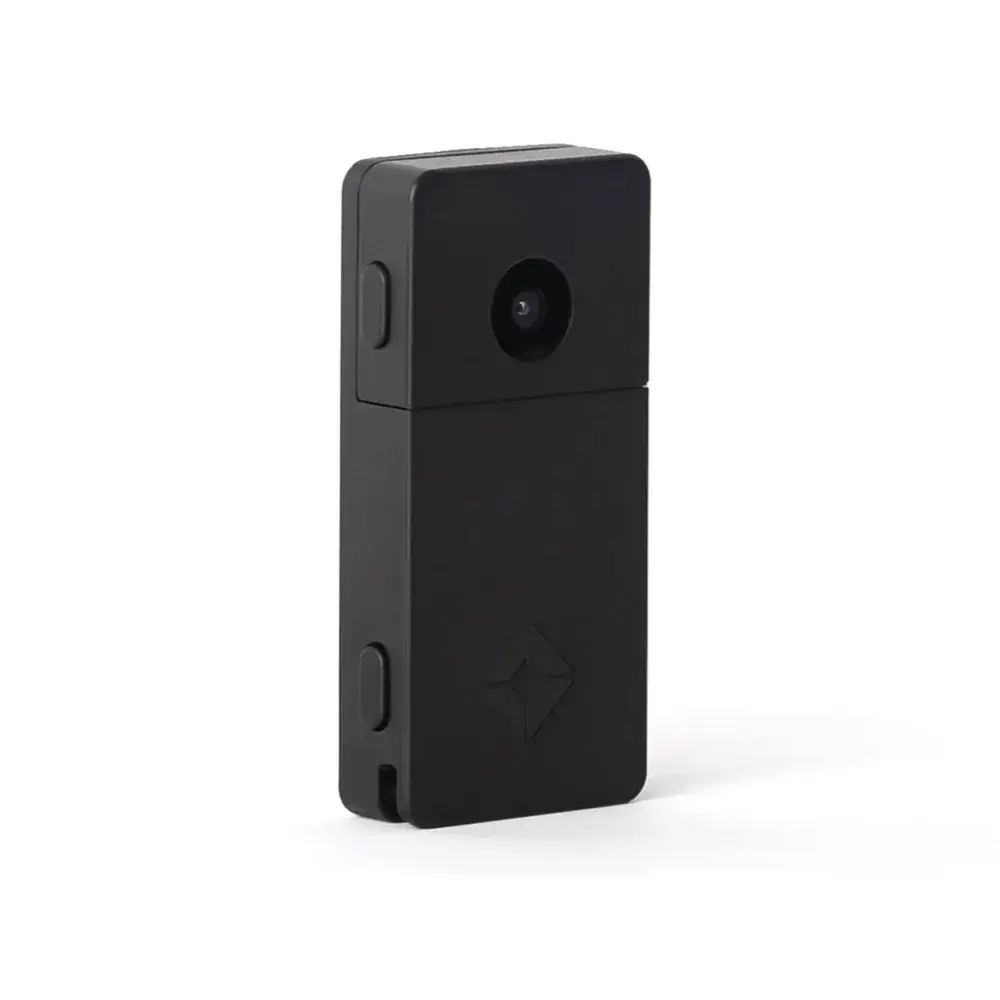
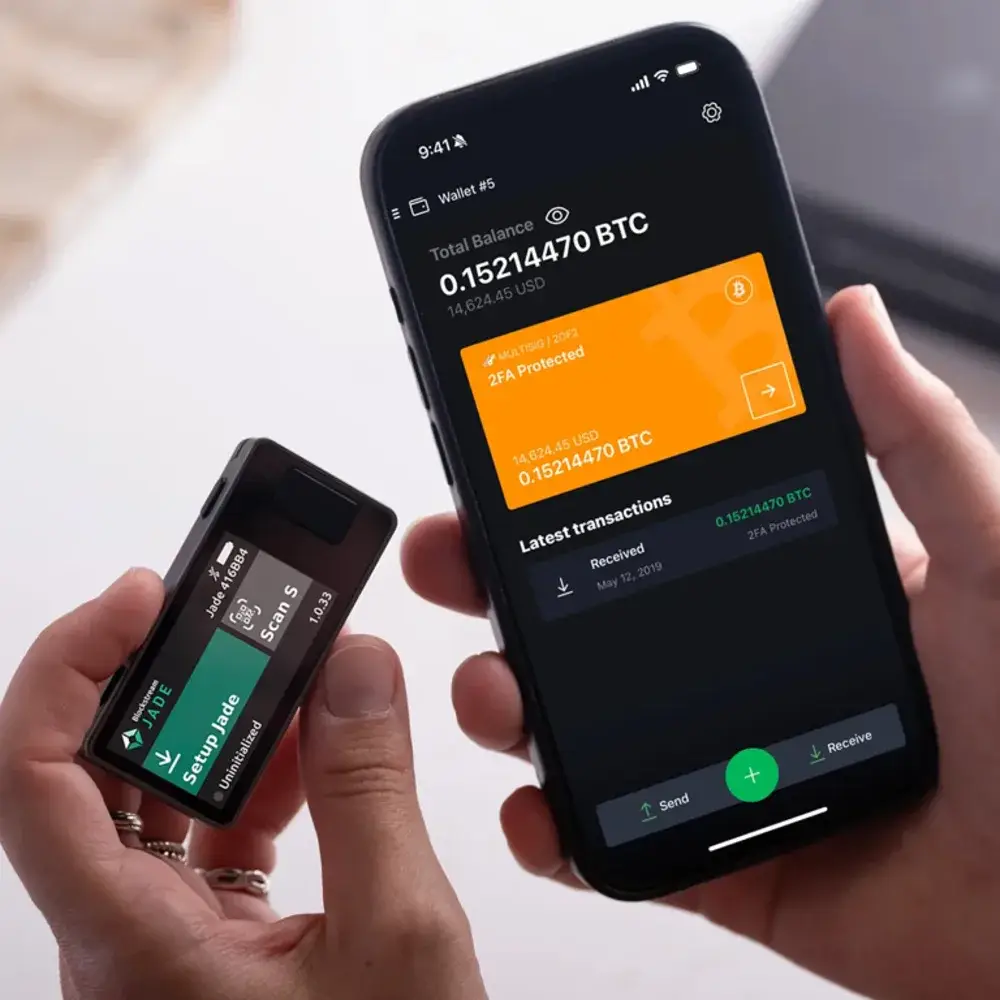
The Jade Plus is completely open source: firmware, hardware and blueprints its audience. It features an air-gapped design with a built-in camera, a 1.9-inch color screen, USB-C, Bluetooth, and a microSD slot for air-gapped firmware updates. With SeedQR, you can restore your recovery phrase as a QR code instead of entering it word for word. It works with Blockstream Green, Sparrow, Nunchuk, and other wallets that support QR or USB, and supports bitcoin and Liquid.
For the key, the Jade Plus uses the blind oracle model: the seed is stored in encrypted form on the device and is only unlocked with your PIN via a Blockstream server or a server you run yourself. After too many failed attempts, the oracle stops working. So there is no secure element; that is the trade-off for the lowest price and complete transparency.
Product page: Blockstream Jade Plus Black (even if Jade Plus Gray).
Trezor Safe 7
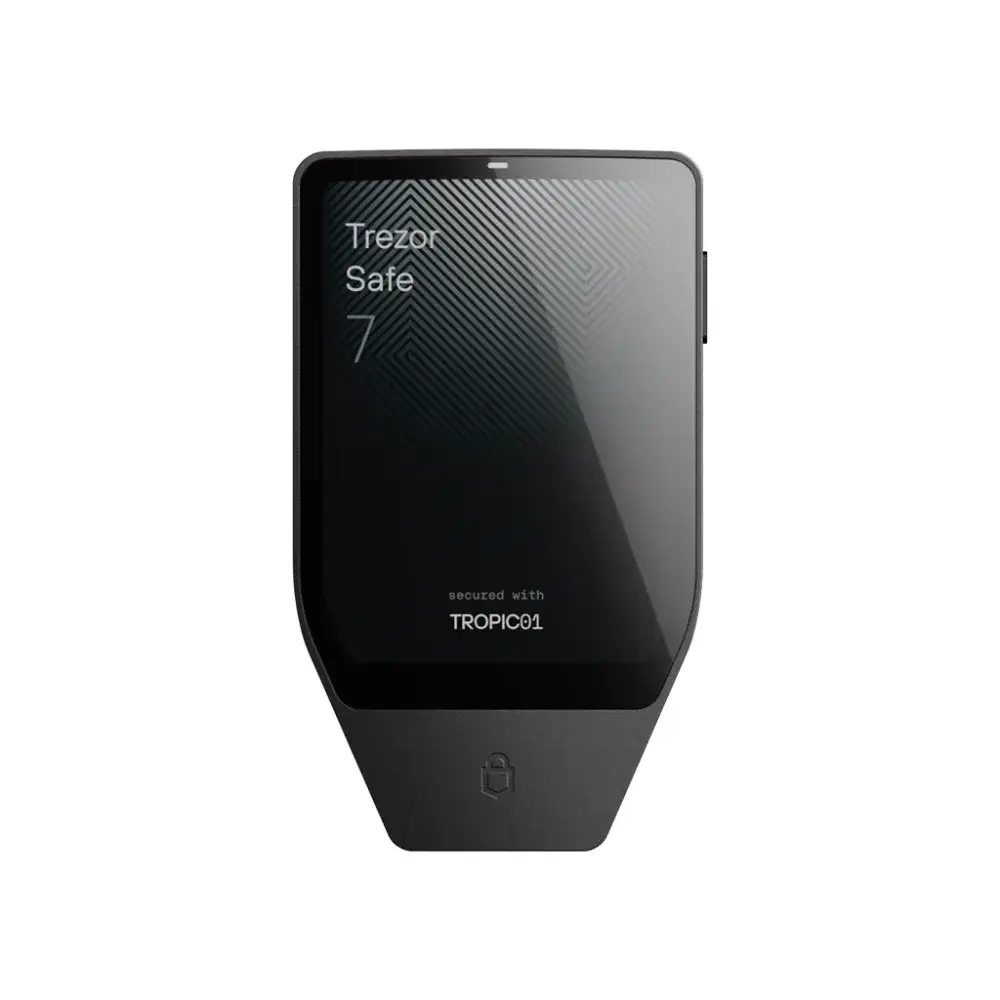
The Safe 7 stores your keys behind two separate secure elements (the auditable TROPIC01 and the EAL6+ certified Optiga Trust M) plus a hardened security processor, from three different vendors. The 2.5-inch touchscreen (520 by 380 pixels, 700 nits, Gorilla Glass 3) displays an address legibly all at once. The chassis is an aluminum unibody with an IP54 rating, the LiFePO4 battery charges wirelessly via Qi2, and Bluetooth runs on an open-source protocol. Backup with 12, 20, or 24 words, multi-share backup, and passphrase.
Two caveats. The Safe 7 does not sign via QR codes, but via USB-C or Bluetooth; anyone who wants to work strictly air-gapped will choose one of the other two. And it comes with universal firmware: in Trezor Suite, you switch it to bitcoin-only firmware.
Product page: Trezor Safe 7 Charcoal Black.
Foundation Passport Prime
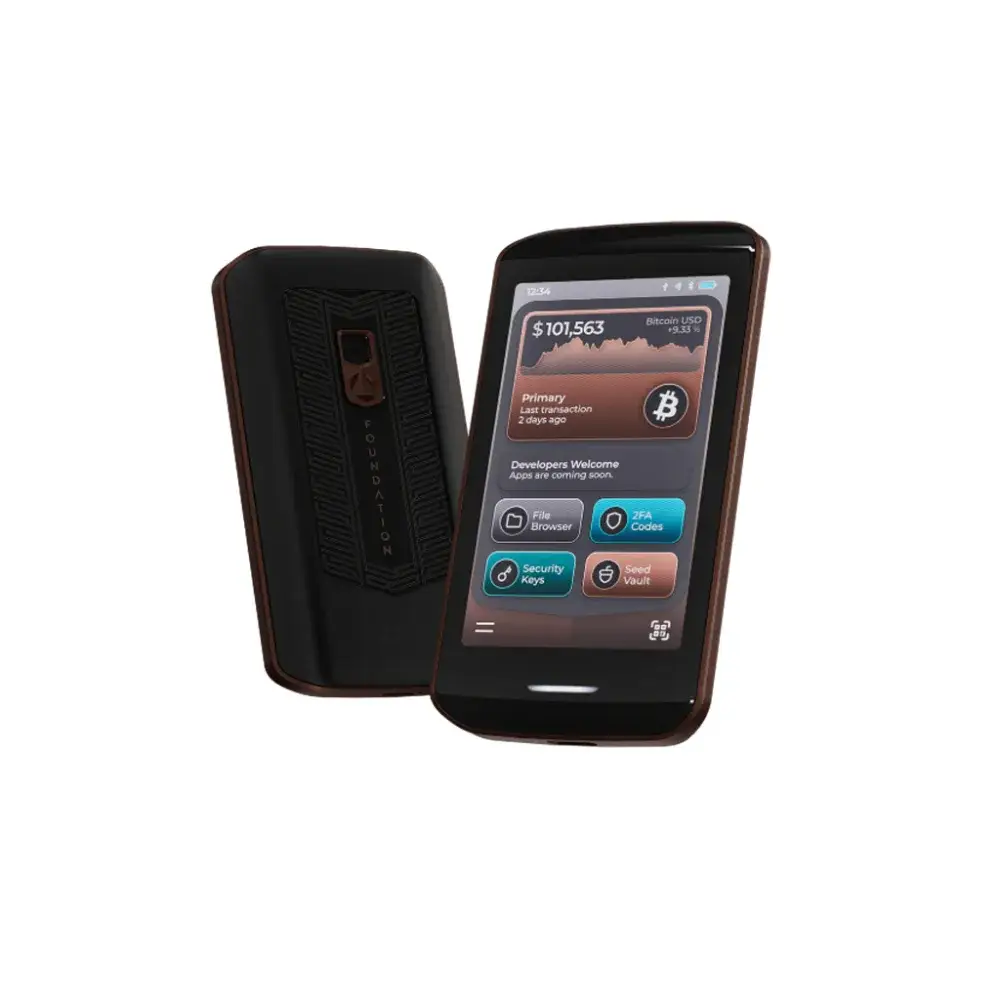
The Passport Prime is a bitcoin wallet with multisig, as well as FIDO security keys, TOTP codes for two-factor authentication, and a 50 GB encrypted vault. It supports air-gapped transactions via QR codes using a built-in camera and a 3.5-inch touchscreen; QuantumLink, a Bluetooth connection with post-quantum encryption, is available if you prefer a wireless connection. The device runs on KeyOS, an independent microkernel, has its own security processor with a secure element, active tamper detection, and wipes itself after ten incorrect PIN codes. Assembled in the United States; hardware and software are open source.
The trade-off: this is the most expensive device, and you're paying for the extra features. If you're just looking for a bitcoin wallet, you don't need them.
Product page: Foundation Passport Prime Black.
Comparing Bitcoin and hardware wallet: The Table, Wallet-by-Wallet
| Criterium | Blockstream Jade Plus | Trezor Safe 7 | Foundation Passport Prime |
|---|---|---|---|
| Open source | Hardware and firmware | Firmware | Hardware and software |
| Air-gapped drawing | Yes, QR camera | No, USB-C or bluetooth | Yes, QR camera |
| Bitcoin only | Yes (plus Liquid) | After switching to bitcoin-only firmware | Yes |
| Screen | 1.9-inch color | 2.5-inch touchscreen | 3.5-inch touchscreen |
| Input | Buttons and camera | Touchscreen | Touchscreen and camera |
| Key protection | Blind oracle, no secure element | Two secure elements plus hardened processor | Security processor with secure element, tamper detection |
| Connections | USB-C, bluetooth, microSD | USB-C, Bluetooth, Qi2 charging | USB-C, NFC, QuantumLink |
| Multisig | Yes | Yes | Yes |
| Extras | SeedQR, Genuine Check | Multi-share backup, aluminium unibody | FIDO, TOTP, 50 GB vault |
| Price (September 2026) | 219 euros | 249 euros | 359 euros |
| Ideal for | Entry, open source | Daily use, large screen | All-in-one |
Comparing Bitcoin and hardware wallet by profile: Which one is right for you?
Beginner, first self-custody, or open source above all. The Blockstream Jade Plus. Open source, bitcoin-only, designed for a seamless air-gapped workflow, and the lowest-priced of the three. You’ll learn self-custody with a serious device without being tied to any ecosystem.
Daily use, large screen, key behind multiple chips. The Trezor Safe 7, running bitcoin-only firmware. Touchscreen that displays an address at a time, two secure elements, wireless charging. Note that it signs transactions via cable or Bluetooth, not via QR code.
All-in-one device. The Foundation Passport Prime. Air-gapped via QR code, plus FIDO keys, two-factor authentication, and an encrypted vault. It’s the most expensive one, and the only one that does more than just store bitcoin.
Larger amounts. Two devices in a multisig setup, for example, a Jade Plus and a Passport Prime, located in different places. All three support multisig and work with Sparrow.
Whatever you choose: the recovery sentence goes into steel. The Seedfan Steel Kit is the simplest way; how you do that is in storing a seed phrase in a steel backup.
Where can you buy a hardware wallet in the Netherlands?
At BitcoinStuffStore, the bitcoin-only online store based in Meppel (Chamber of Commerce No. 90462769). All three wallets are in stock, come directly from the manufacturer or its distributor, and are shipped from the Netherlands. You can pay with bitcoin via Lightning or on-chain, with iDEAL, or by credit card. To learn how to place an order and what to do first after your purchase, read Buy hardware wallet in the Netherlands; the choice per profile is in best bitcoin hardware wallet 2026. You can find the complete range in the category hardware wallets.
Frequently Asked Questions About Comparing bitcoin and hardware wallet
From the shop
Ready to get started?
Everything covered in this guide is in the shop.