Guide | Bitcoin Basics | 7 min read
Bitcoin Full Node Benefits: 5 Reasons to Run Your Own
July 2026By Mario
Are you sure your bitcoin transaction is actually valid? Not whether it was sent, but whether it complies with bitcoin’s own rules, verified by your own software, not by some random third-party server. That’s exactly the question behind the benefits of a bitcoin full node.
Most bitcoin users rely on an external server, whether it’s their wallet app, an exchange, or an anonymous node somewhere on the internet. That’s understandable, since running your own node sounds technical and complicated. But once bitcoin starts representing serious money for you, the calculation changes. Then the benefits of a bitcoin full node are no longer a luxury, they’re simply common sense. In this article, I’ll list five of them. Honestly, without exaggeration, and including what a node doesn’t do.
Advantage 1: Verify yourself instead of trusting
A bitcoin full node runs the entire bitcoin protocol. It downloads every block, verifies every transaction, and applies the rules as defined by bitcoin. Not an exchange’s interpretation, not a wallet provider’s version, but the protocol itself, from the genesis block to the most recent transaction.
What this means in practice: if your wallet is connected to your own node, you verify the validity of an incoming transaction yourself. You don’t need permission from a third party. You don’t have to ask an exchange server or an anonymous Electrum node. You check it yourself. One of the most underrated benefits of a bitcoin full node is precisely this: you no longer need to trust anyone, just your own node.
“Verify, don’t trust” is the fundamental principle of the bitcoin network. See also bitcoin.org/nl for the explanation of how nodes monitor consensus. Running your own node is the only way to literally live that principle.
Advantage 2: Privacy with your wallet questions
Every time your wallet requests your balance or sends a transaction, it sends information to a server. Which addresses do you have? What amount are you moving? When? If that server belongs to a third party, that party knows more about you than you would want.
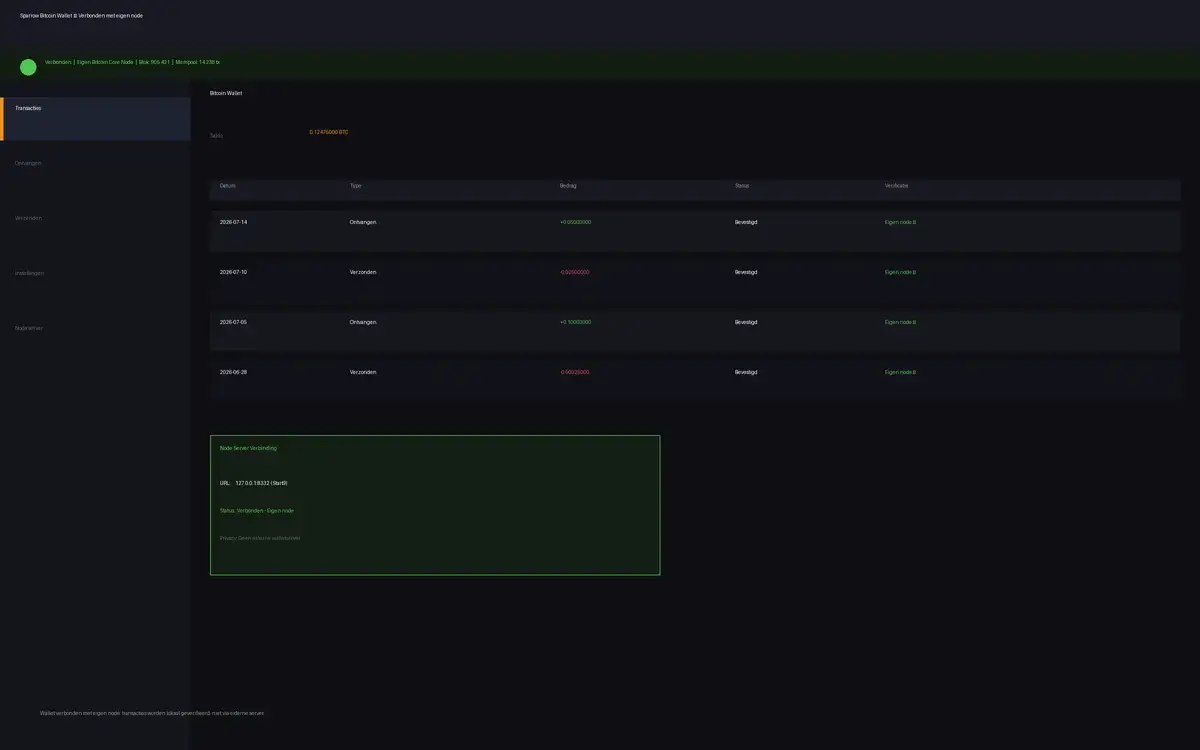
If you connect your wallet to your own node, you’re only asking those questions of yourself. Your node has the entire blockchain locally; it already knows everything. No wallet query metadata is sent to an external wallet server anymore, but running your own node doesn’t automatically solve privacy issues at the network level. This is one of the practical benefits of a bitcoin full node that most people underestimate: it’s not a privacy miracle, but it’s a concrete step forward compared to the standard.
Let’s be honest: a node doesn’t solve all privacy issues. On-chain addresses are always public. If you buy bitcoin under your name on an exchange and reuse the same addresses, a node won’t hide that link. But in the layer between your wallet and the network, these are the concrete benefits of a bitcoin full node that really matter.
Benefit 3: Sovereignty and censorship resistance
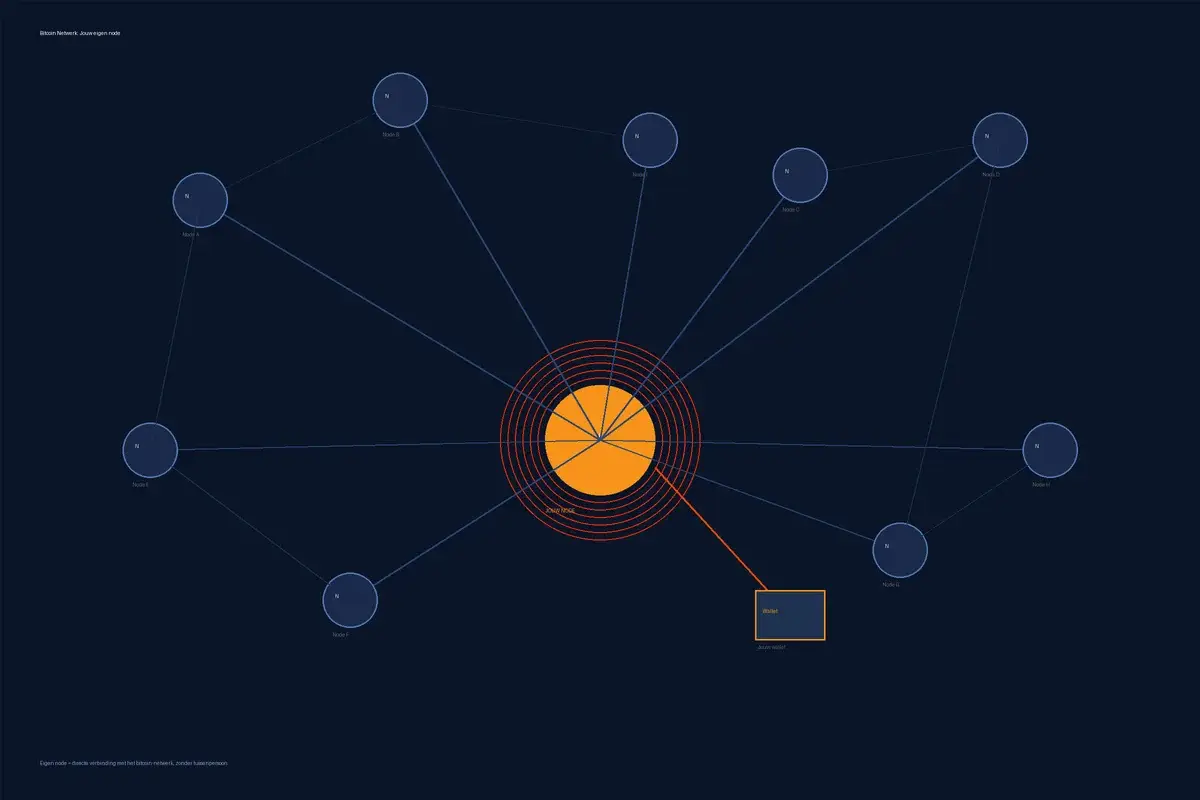
Having your own node connects you directly to the bitcoin network. You send transactions through your own software, not through an exchange’s or node provider’s API. You’re less dependent on an external node provider and validate transactions through your own software, but you do remain dependent on your own internet connection.
This is the sovereignty aspect of the bitcoin full node benefits. It’s not the most obvious in everyday use, but it may well be the most fundamental. If a government or company blocks certain transactions through large node providers, it doesn’t directly affect you. You are your own gateway to the network. You apply your own version of the bitcoin rules. You decide. See also bitcoin.org/en/full-node for an overview of what a full node does and does not do.
Benefit 4: Foundation for Your bitcoin Setup
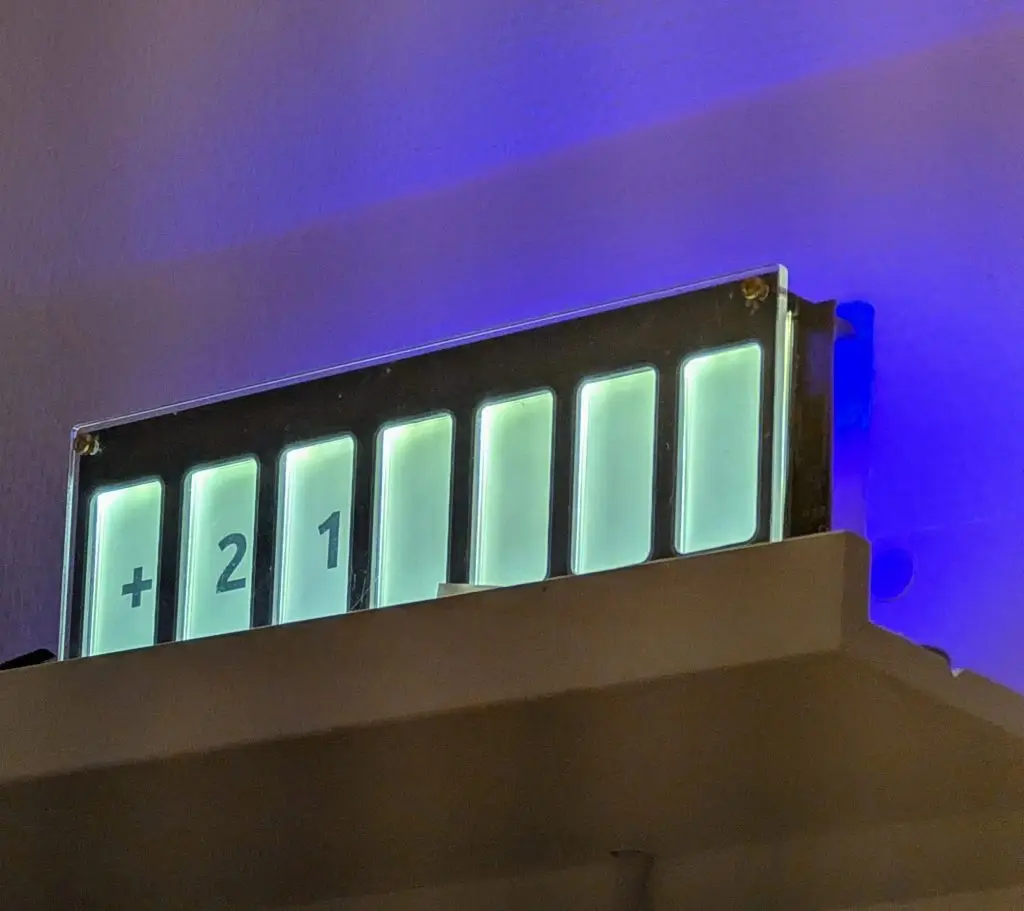
Having your own node is more than just being a verifier. It’s the foundation for a broader bitcoin infrastructure. Lightning payment channels work more reliably when they’re backed by your own node. Having your own block explorer lets you look up transactions without leaking metadata. And hardware such as the BTClock Rev. B Frontlight Connects via a custom endpoint to a self-hosted mempool instance on your node, so that the bitcoin data you see on your desktop belongs to you and not to an external server.
This makes the benefits of the bitcoin full node greater than they appear at first glance. You’re not investing in a single feature, but in a foundation on which you can build further. Later, you can add a Lightning node, your own block explorer, or a BTClock on your desktop. Everything builds on the same foundation.
Benefit 5: Learning and strengthening the network
Running your own node is also a learning experience. You get to see how bitcoin works from the inside: how blocks propagate, how transactions are validated, and how the network reaches consensus without a central authority. That’s knowledge you can’t get from a book, you gain it simply by doing it.
At the same time, you’re contributing to the network. The bitcoin network consists of thousands of nodes worldwide. Every node that independently enforces the rules makes the network more robust and harder to manipulate. The impact per node isn’t huge, but it all adds up. One of the more modest benefits of running a bitcoin full node is that you learn as you contribute. Not because you’re making money from it, because you’re not, but because you’re contributing to a network that you yourself use and trust.
What a node does not do
Here’s the honest take, because some expectations are just off the mark. And being honest about the benefits of the bitcoin full node also means explaining what they aren’t.
A node does not generate any mining revenue. You validate transactions and blocks, but you do not mine. Without mining hardware, you will not earn bitcoin. This is not a limitation of the bitcoin full node benefits; it is simply how the protocol works.
A node also costs something. Electricity, continuously active; the exact consumption depends on the hardware. Disk space, hundreds of gigabytes for the full blockchain. And some attention: software needs to be maintained. That is not much, but it is not zero.
And just running a node doesn't automatically make your wallet more private. You also have to configure your wallet to connect through your own node, instead of automatically via external servers. Most people forget that extra step.
The first step
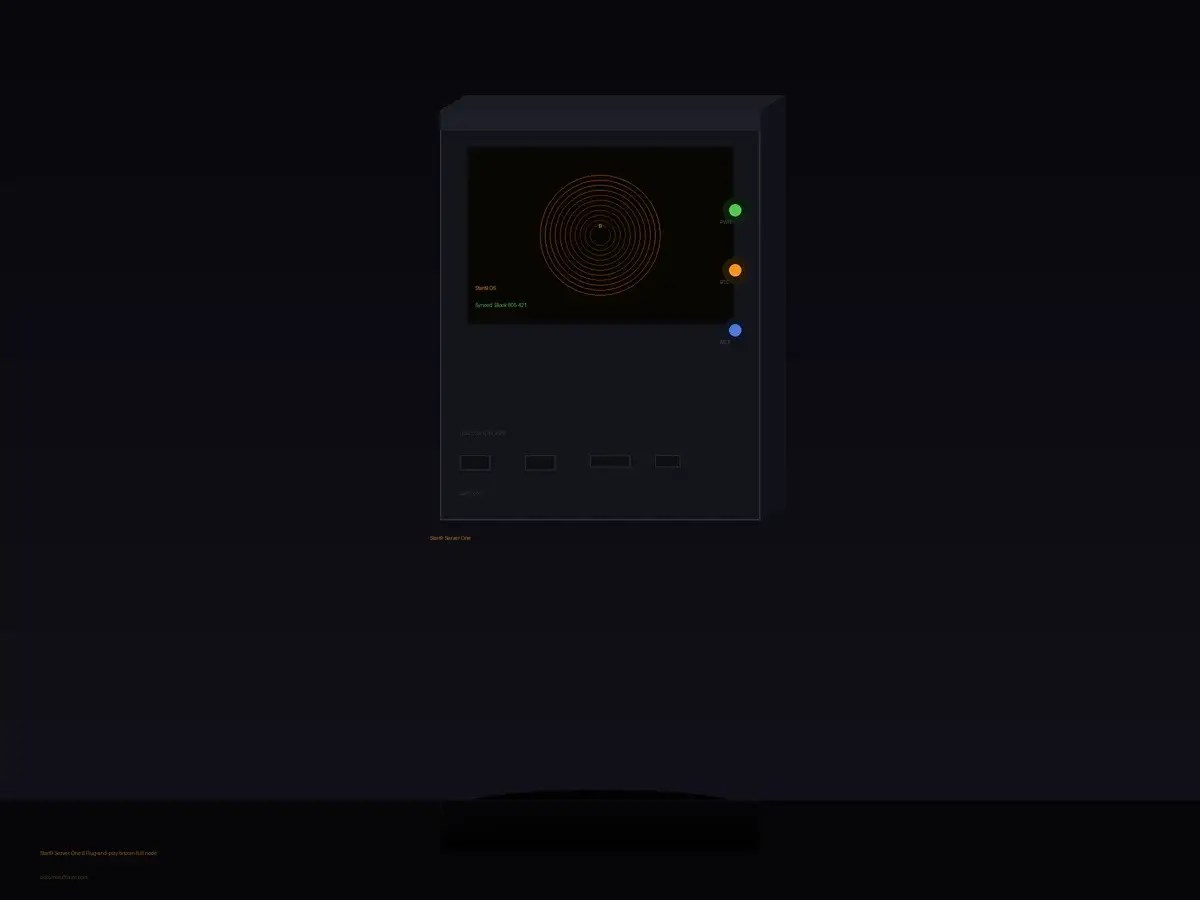
Do you want to run a node yourself? The most accessible way is a plug-and-play node, such as the Start9 Server One. It runs StartOS, an open-source operating system for self-hosted software. You plug it in, set it up via a browser interface, and have a working node within a few hours. No command line knowledge required.
All of the bitcoin full node benefits described in this article apply: verification, privacy, sovereignty, a foundation for Lightning and BTClock, and learning. The Start9 can also be expanded with additional bitcoin apps on the same device.
More hardware that works well with a custom node can be found in the gadgets category from the store.
Frequently Asked Questions About the Benefits of the bitcoin Full Node
From the shop
Ready to get started?
Everything covered in this guide is in the shop.