Guide | Bitcoin Basics | 9 min read
Start9 vs. Umbrel: Which bitcoin node software should you choose?
July 2026By Mario
In short: Start9 and Umbrel are the two most talked-about options if you want to run your own bitcoin node. Start9 opts for a personal server with a strong focus on Bitcoin and sovereignty: no mandatory account, your own hardware, and full control over your network choices. Umbrel prioritizes breadth and accessibility. To make the right choice between Start9 and Umbrel, you should base your decision on three factors: your level of knowledge, your budget, and how much freedom you want to retain over your own setup.
You have read enough about why you would run your own bitcoin node. Not your node, not your rules. Now the next question: which software do you choose? Start9 vs Umbrel is soon the comparison you run into, and that makes sense: both are the best-known options, both run Bitcoin and both promise to make you independent of banks and third parties. The way they go about it differs. The Start9 vs Umbrel question ultimately comes down to a choice between control and convenience.
This is an honest comparison. We sell the Start9 Server One because we think it is a good product. The reasons are laid out below.

Start9 vs Umbrel: what are they exactly?
Start9 is a personal server environment (StartOS) with a strong focus on Bitcoin and sovereignty. Start9 runs on the Start9 Server One, dedicated hardware that is plug-and-play. It is fully open-source, fully self-hosted, and requires no account. In addition to Bitcoin services such as BTCPay Server, Core Lightning, and LND, StartOS also runs other open-source software through its own marketplace, including Nextcloud, Vaultwarden, and Jellyfin.
Umbrel is node software for Raspberry Pi, the custom Umbrel Home hardware, or other supported hardware. Designed for maximum accessibility: the interface is clean and consumer-oriented, the app ecosystem is broad, and the installation has been kept intentionally low-threshold.
When weighing Start9 vs. Umbrel, keep these two premises side by side.
| Benchmark | Start9 | Umbrel |
|---|---|---|
| Privacy | No mandatory account, control at your server and network choices | Remote access via Tailscale of Tor (built-in remote access feature under development) |
| Hardware entry-level | Starting from approximately 1,000 euros (Server One, plug-and-play) | EUR 80-150 (Pi 5 or amd64 hardware, DIY) |
| App focus | Bitcoin Spotlight: BTCPay, CLN, LND; also Nextcloud, Vaultwarden, Jellyfin | Wide-ranging, including many non-Bitcoin apps |
| Level of knowledge | Documented, slightly more technical | Accessible, quick setup |
| Guidance | Included via Start9 documentation | Community and own forums |
1. Privacy and sovereignty
The first and most essential question in the Start9 vs Umbrel comparison: who is between you and your node?
Start9 has a clear answer to this: you are in control. No mandatory account, no telemetry, and no forced dependency on external servers. Control over your own node lies with your hardware and the network choices you make. If you want to activate Tor or use StartTunnel for remote access, you do so via your own settings on your own server. See the officiële Start9-documentatie for the details of the network strategy.
Umbrel works differently. For remote access, Umbrel offers the option to connect via Tailscale or Tor. Its own built-in remote access feature is currently still under development. That means remote access via Umbrel now requires an extra tool (Tailscale) or a technical step (Tor). The current status is described on the Umbrel remote access page. Usable, but it adds an extra layer outside your local network.
This is the core of the Start9 vs. Umbrel privacy distinction: with Start9, you have no mandatory account and you keep control over your own server and network choices. With Umbrel, remote access now relies on Tailscale or a manual Tor setup. Which approach you prefer depends on your technical comfort and your privacy priorities.
2. Hardware: Server One vs Pi 5
In the Start9 vs Umbrel hardware comparison, two different approaches face each other.
Start9 Server One is dedicated hardware, custom-built for Start9. You set it down, turn it on, and the software is already on it. No loose cables, no flashing an SD card, no arranging a separate power supply. The purchase price is considerably higher than DIY. In return, you get guided setup, warranty, and a device with the right specifications for the software. The current price and available configurations can be found at the bottom of this article with the product.
Umbrel officially runs on a Raspberry Pi 5 or other supported hardware, including amd64 systems. The entry costs are approximately EUR 80 to 150, depending on the components you choose. The DIY factor is high: you assemble it yourself, configure it yourself, and troubleshoot yourself. That is attractive for those who want to learn, but it is a higher barrier than the purchase price suggests.
The choice on the hardware axis is also a choice about time. Start9 Server One costs more money upfront. Umbrel costs more hours. Those are real costs, even though they do not show up in the shop price.
| Component | Recommendation |
|---|---|
| Computing power | Raspberry Pi 5 (ARM Cortex-A76 2.4 GHz) |
| RAM | 8 GB LPDDR4X (recommended) |
| Storage | External SSD 1 TB+ via USB 3.0 |
| OS | Raspberry Pi OS 64-bit or Ubuntu |
| Software | Bitcoin Core (full or pruned) |
| Bandwidth | ~500 GB/month (after IBD) |
| Power consumption | ~8-15 W average |
| Costs | ~100-150 euro excl. markup |
3. App Ecosystem: Bitcoin Focus vs. Broad Approach
In the Start9 vs Umbrel app comparison, the biggest philosophical divide lies between the two platforms.
Umbrel offers a wide range of apps. In addition to Bitcoin and Lightning applications, you’ll find Nextcloud for files, Plex for media, Home Assistant for home automation, and dozens of other self-hosted tools. Umbrel deliberately positions itself as a general-purpose self-hosted server platform, with Bitcoin as just one of many apps.
Start9 has a strong focus on Bitcoin and sovereignty, but is not limited to Bitcoin. Through its own marketplace, StartOS also runs other open-source software, such as Nextcloud, Vaultwarden, and Jellyfin, in addition to the Bitcoin services BTCPay Server, Core Lightning (CLN), LND, and Mempool.space. Start9 has deliberately chosen self-hosting with sovereignty at its core.
For those who run a pure bitcoin node, the Start9 app suite is robust and comprehensive. For those who also want to use their home server as a Nextcloud or media server, both platforms offer substantial capabilities. The difference is more philosophical than practical: Start9, with sovereignty at its core, versus Umbrel, with breadth at its core. That’s the real distinction when choosing between Start9 and Umbrel apps.
4. Level of knowledge and ease of use
On knowledge level and ease of use: Umbrel is easier to start with, Start9 is more extensively documented.
Umbrel is deliberately designed for the first-timer. The interface is clean and intuitive, the installation is quick and the app store feels like a phone. That makes Umbrel attractive for anyone running a node for the first time without wanting to dive deep into the technology.
Start9 asks for a bit more technical willingness during the initial setup, but is documented more extensively and in greater depth. The official documentation platform at docs.start9.com provide detailed explanations for each step, including troubleshooting. Once set up, the Start9 interface is clearer for a technically inclined user than Umbrel's consumer interface.
The difference in barrier is smaller than you think. Start9 Server One completely lowers the hardware barrier through plug-and-play: nothing to flash, nothing to assemble. The technical readiness is in the software configuration, not the hardware. For anyone taking the Start9 vs Umbrel step for the first time, that is reassuring.
5. Price and total costs
In the Start9 vs Umbrel price comparison, the total cost counts alongside the purchase price.
An Umbrel setup on a Raspberry Pi 5 is the cheaper route on paper. Hardware of about EUR 80 to 150, software free. But free doesn't count the time you invest in configuration, troubleshooting, and learning to deal with a self-assembled system.
The Start9 Server One costs a multiple of a DIY setup. For that you get dedicated hardware, an optimized system and guided documentation.
Anyone who looks purely at the purchase price chooses Umbrel. Anyone who counts the total cost, including time and learning curve, sees the gap narrowing. Viewed this way, the Start9 vs Umbrel price gap becomes smaller than the sticker price suggests.
Start9 vs Umbrel: the choice
Both options are serious. Which of the two suits you better depends on your priorities.
Choose Start9 if sovereignty and control are your priority, if you want a device that just works and if you are looking for a strong Bitcoin focus. The higher purchase price is for those who want to make no concessions on privacy.
Choose Umbrel if you want to experiment with a broader app set, if the hardware costs of the Server One do not fit your budget right now, or if you deliberately want to take the do-it-yourself route to learn more. It is a serious choice and not a compromise, although it brings more self-management.
Going for the Start9 Server One? We are a Dutch Bitcoin-only store and we sell the Server One because we think it is a good product.
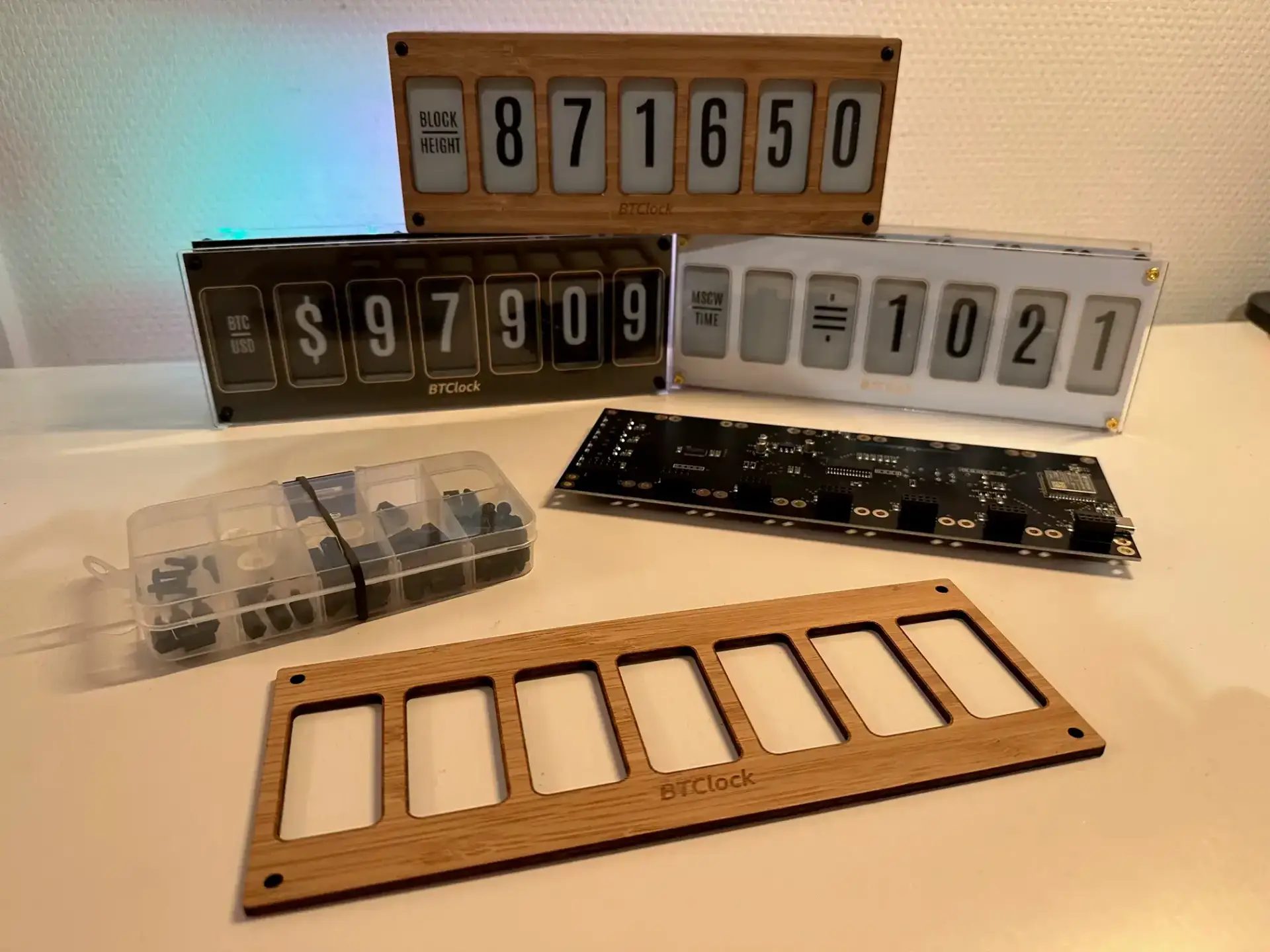
You will find Start9 Server One in the shop. Want to complete your bitcoin home? Then the BTClock Rev. B Frontlight Right on the mark: live bitcoin data on your wall, self-hosted just as it should be. You can find more bitcoin hardware in the gadgets category.