Guide | Bitaxe Setup | 7-minute read
Bitaxe Firmware Changelog: All Changes by AxeOS Version
June 2026By Mario
The Bitaxe firmware changelog tells you what has changed in each new AxeOS release. Bug fixes, new features, hardware support, performance improvements, it’s all in the Bitaxe firmware changelog on GitHub. But how do you read a changelog like that if you don’t dive into code every day? This article walks you through the most important changes in recent AxeOS versions and explains what to look out for when updating.
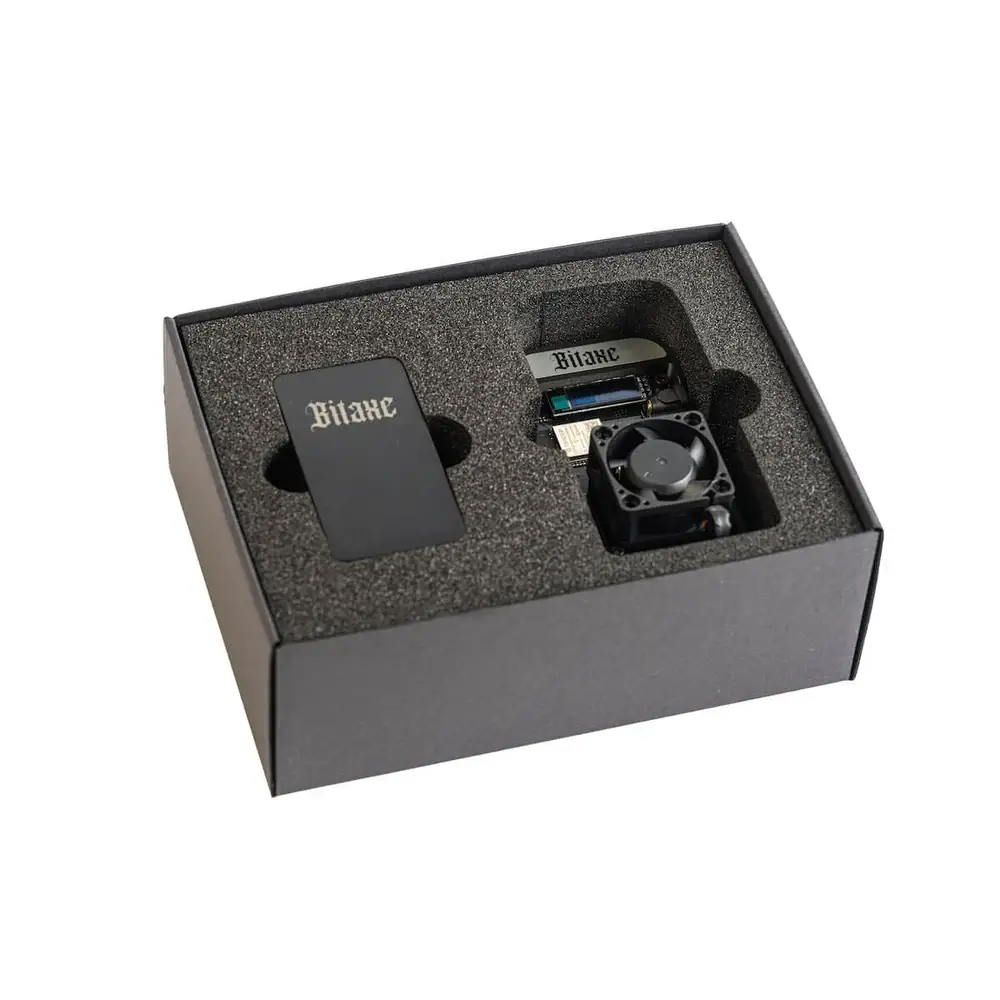
Every Bitaxe firmware version receives an official changelog on GitHub.
Where can you find the official Bitaxe firmware changelog?
The official Bitaxe firmware changelog is available at the releases page of the ESP-Miner project on GitHub. Each release has its own page with a list of changes, linked to the corresponding pull requests. If you want to know exactly what has changed in a particular version, this is the only reliable source.
The Bitaxe Web Flasher on our site automatically fetches available versions from GitHub. You can see the version numbers in the flasher, but you can read the details for each version on the releases page.
How do you read an AxeOS firmware changelog?
A typical AxeOS changelog is organized into sections. Many releases distinguish between changes in the firmware itself (the ESP32 code running on the miner) and changes in AxeOS (the web interface). That distinction is useful: a change in the web interface does not affect your hashrate or stability, whereas an adjustment to the core firmware might.
Pull request links in the Bitaxe firmware changelog point to the details of each change. If you're curious about a specific fix, click on the corresponding PR number to see the full context. This may sound technical, but in practice, it's a quick way to see if a bug that affected you has actually been fixed.
Bitaxe firmware changelog: from v2.12 to v2.13
The v2.13.0-release was a significant update with multiple new hardware additions and improvements for existing models.
New hardware in v2.13.0
Support for the Bitaxe GT 801 was added for the first time. This model has a different chipset configuration and required firmware adjustments. The Bitaxe 650 Duo (with two chips side by side) was also added, including specific default settings for that configuration.
AxeOS improvements in v2.13.0
AtlasPool users received a direct dashboard link in the AxeOS interface. This is a small detail, but useful if you use AtlasPool as a mining pool. Furthermore, various minor fixes were implemented in the web interface and the statistics display.
v2.13.1: bug fix for manufacturers
v2.13.1 was a minor bug-fix release, specifically aimed at the self-test feature that manufacturers use when producing new Bitaxe hardware. As a consumer, you likely noticed little difference between v2.13.0 and v2.13.1.
v2.13.2: Domain monitoring and stability fixes
v2.13.2 voegde verbeterde domain monitoring toe via een uitgebreide self-test. De Bitaxe controleert nu zelf actief of de DNS-resolutie en de verbinding met de pool goed werken. Als er iets mis is, zie je dat sneller in de webinterface.
What's in the Bitaxe firmware changelog for v2.14.x?
The v2.14.0 beta series is the next major step. The beta versions are already running with testers and contain features that are relevant to many users.
Customizable dashboard
In v2.14.0b1, a customizable dashboard was introduced. You can now decide which statistics you see on the AxeOS homepage: hashrate, temperature, uptime, estimated block probability, power consumption, and more.
Scoreboard
A scoreboard tracks how close you came to finding a block. For solo miners, this is a useful addition: you can see whether your miner is actively producing good near-miss shares.
BIP signaling in block header
v2.14.0b1 added support for displaying BIP-110 and BIP-54 signaling in the block header information. This is a niche feature for users who actively follow the technical details of the bitcoin protocol.
Technical fixes in v2.14.0b2
The second beta brought mobile responsiveness improvements, a fix for pool difficulty logging, and CPU usage stabilization on the ESP32. This last fix is relevant for long-term stability.
Wat staat er in de Bitaxe firmware changelog voor v2.15.x?
v2.15.0 verscheen op 21 augustus 2026 als stabiele release en is de grootste structurele wijziging sinds lange tijd. Daarna volgden bugfix-release v2.15.1 (29 augustus), testversie v2.15.2 (18 september) en v2.15.3 (20 september 2026).
Webinterface in de firmware
De AxeOS-webinterface zit sinds v2.15.0 in esp-miner.bin. Een apart www.bin-bestand uploaden is niet meer nodig en staat ook niet meer in de release. Na de update moet je je browser wel hard verversen, anders zie je de oude interface uit de cache. Hoe je dat aanpakt staat in onze gids voor de Bitaxe Gamma firmware update.
mDNS en dashboard
Je miner is bereikbaar via zijn hostnaam in plaats van het IP-adres. Het dashboard kreeg meerdere lijnen in de grafieken, totale uptime en totaal aantal hashes, een bevestiging voor herstarten en betere detectie van ondervoltage.
Stratum V2 en pools
SV2-frames van 8 kB, een per-pool optie voor verplichte authenticatie, fractionele pool difficulty tegen onnodige rejects, en extra pools in de snelkeuze.
Hardware en onderhoud
Ondersteuning voor boardversie 603, Bluetooth LE, een hogere ingangsspanning voor zonne-opstellingen, en een reeks fixes voor heap-fragmentatie, race conditions en WebSocket-reconnects. AxeOS draait nu op Angular 19 met Tailwind; de firmware is gebouwd op ESP-IDF 6.0.2.
v2.15.1: bugfixes
Wifi op routers in WPA2/WPA3-compatibiliteitsmodus werkt weer, de IP-adressen op de Swarm-pagina zijn gerepareerd, de melding op de updatepagina is aangepast en reconnect-storms van trage clients worden afgevangen. Die laatste fix staat in de release notes op GitHub bij v2.15.2, maar zit al in v2.15.1.
v2.15.2: nieuwe chips en modellen (testversie)
v2.15.2 verscheen op 18 september 2026 als pre-release en werd twee dagen later opgevolgd door v2.15.3. Er kwamen drivers bij voor de BM1372- en BM1373-chips en ondersteuning voor de Naja Duo en Gamma Hex.
v2.15.3: fix voor de frequentiewaarschuwing
v2.15.3 verscheen op 20 september 2026 als stabiele release en is de versie die we nu aanraden. De enige nieuwe fix: de waarschuwing voor een te lage frequentie kijkt nu naar de presets van je apparaat. Eerder gold voor elk apparaat een grens van 400 MHz, waardoor de Naja Duo op zijn standaard 327 MHz onterecht een waarschuwing gaf. Het werk uit v2.15.2 zit er ook in. Updaten gaat zoals bij v2.15.1: je uploadt alleen esp-miner.bin. Hoe dat stap voor stap gaat, lees je in onze gids voor de Bitaxe Gamma firmware update.
When is a firmware update worth it?
Not every entry in the Bitaxe firmware changelog is relevant to everyone. Here is the framework for evaluating them:
- Fixed a bug that affects you: update as soon as the stable version containing the fix is available.
- New hardware support: relevant only if you have that specific model.
- Web interface improvements: convenient but not urgent. You can update whenever it suits you.
- Beta features you are interested in: try the beta at your own risk, know how to roll back to stable.
- Everything works and there is no specific reason: Do not update. Stability has priority.
Early access: what is that exactly?
In addition to stable releases and beta versions, there is also an “early access” track. These are builds that come straight from the project's canary branch, even before they get a version number. They are used by contributors who want to test new features before they enter the beta phase. Do not use these builds on a production miner.
How do you stay informed about new releases?
- GitHub Watch: go to the ESP-Miner repository and click “Watch” to receive notifications for new releases.
- Bitaxe Discord: from Bitaxe Discord is the place where new versions are announced and where testers share their experiences.
- AxeOS web interface: If the Bitaxe is already running, you can check the web interface to see if a newer version is available (OTA notification).
Flashing firmware: how do you do that?
If you want to perform a firmware update via USB or do a factory reset, use the Bitaxe Web Flasher on our site. Works directly in Chrome or Edge, no software installation needed. Also read the accompanying manual about Which Bitaxe Gamma firmware should you choose?.
Frequently Asked Questions About the Bitaxe Firmware Changelog
Is the ESP-Miner GitHub page the only place for changelogs?
Yes. The releases page on GitHub is the official and most complete source. Information on forums or Discord can be outdated or incomplete.
How do I know which version my Bitaxe is currently running?
Open the AxeOS web interface via your miner's IP address. The version is clearly visible on the dashboard, typically in the top right or in the system information.
Does each Bitaxe variant have its own firmware?
The firmware code is the same for all Bitaxe models, but when flashing, you must select the correct hardware profile. The Bitaxe Web Flasher displays the available options for each model.
Do you have questions about a specific AxeOS version or a Bitaxe firmware changelog that you don't understand? Please contact us via our Contact page or via the Bitaxe Discord.