Guide | Bitaxe Setup | 9-minute read
Parasitespace Proves That Solo Mining Works
April 2026By Mario
Messages > New message
(Classic Editor, tab “Text” / HTML)
======================================================, >
Block #945.601: parasite.space proves that solo mining works
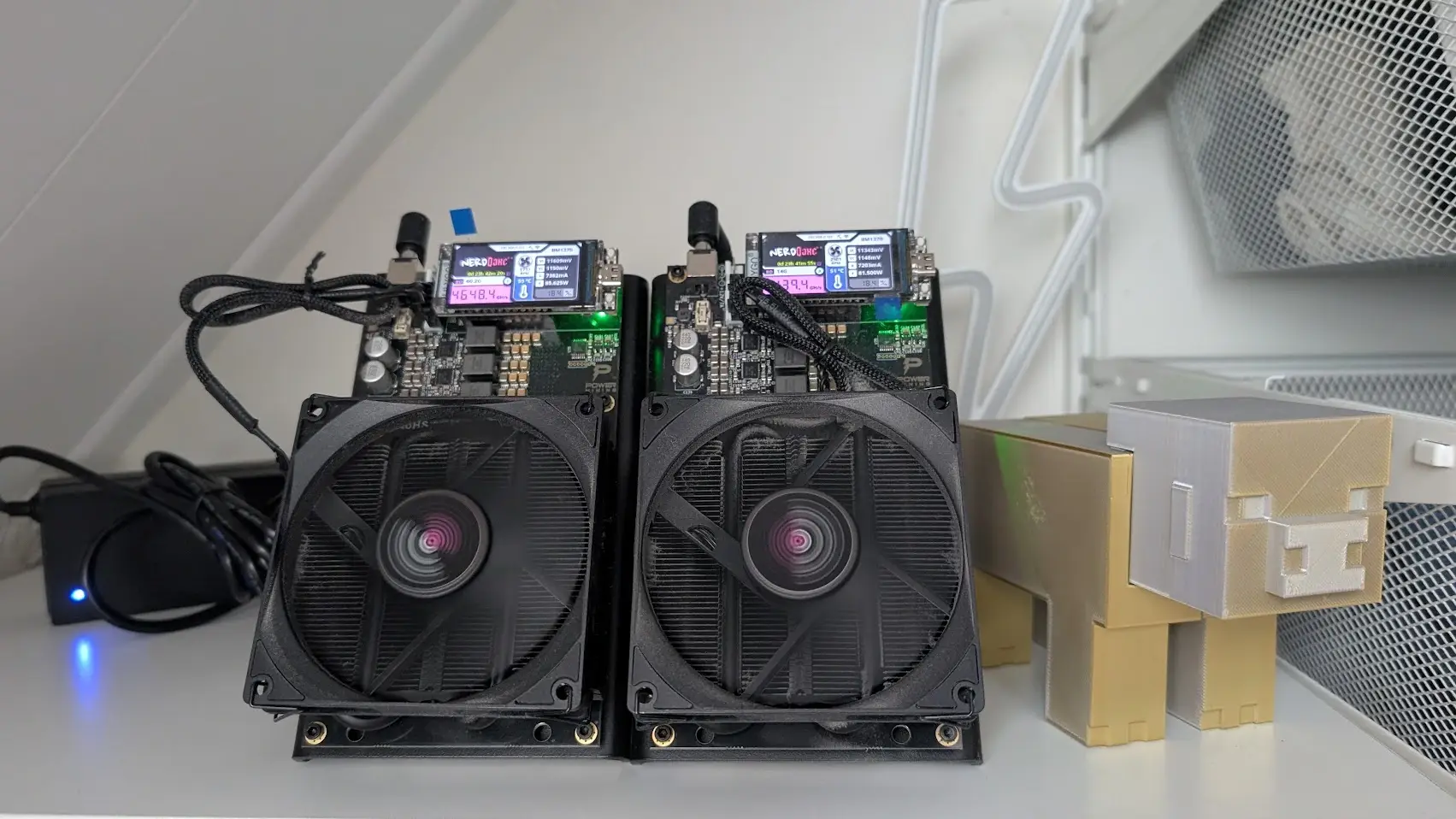
Parasite Space is the bitcoin mining pool that has won the hearts of home miners over the past year. On April 18, 2026, the pool mined its second block ever: #945.601. The winning miner was running at just 4.8 TH/s. That’s a hashrate you can achieve at home with a few NerdQaxe++s or a stack of Bitaxe Gammas. Solo mining is exciting again, and parasite.space has a model that makes it fairer than ever.
With a few NerdQaxe++’s on parasite, your share in a found block is small: think a few euros. Nothing to write home about. But the concept is genuinely one of the coolest things happening in solo mining right now, and I want to explain why.
What exactly is parasite.space?
Parasite is a Bitcoin mining pool specifically for home miners, found at parasite.space. The pool was established in April 2025 by ZK Shark (the pseudonym behind the Ordinal Maxi Biz NFT collection), but don't let the NFT background deter you: the pool itself is Bitcoin-only and has no pool fees.
What makes a parasite unique is its Hybrid payout model. De meeste solo mining pools (zoals het klassieke CKpool) werken winner-takes-all: vind je een block, dan krijg jij de volledige beloning minus 2% pool fee. Vind je níks, dan krijg je ook niks. Statistisch betekent dat: de overgrote meerderheid van deelnemers ziet nooit een cent.
Parasite does it differently:
- 1 BTC goes directly to the winning miner, the person whose machine finds the block.
- The remainder (2.125 BTC plus transaction fees) will be divided proportionally across all participants, based on shares provided since the last block.
- No pool fees.
- Payouts via Lightning.
In short: the lottery incentive remains (you can win a whole bitcoin), but everyone who participated also gets something. Even if you “only” have a Bitaxe Gamma.
The last block: 48 days of waiting, then it happened
Block#945.601 was found on April 18, 2026, exactly 48 days after Parasite's first block (#938.713, late February). Two blocks in 14 months, on a pool running approximately 52 PH/s in a network of about 1 zettahash. That's a fraction of a percent of the total hashrate.
The most interesting detail for home miners: the winning miner was running on 4.8 TH/s. That's not a data center. That's one NerdQaxe++ in the attic, or a few Bitaxe Gamma units lined up next to each other. Someone whose electricity bill has three digits, not seven.
The fact that two blocks have been found within 14 months proves, according to analysts, that the model works. The proportional payouts retain hashrate during the dry periods, and the lottery chance remains intact. Whether it is sustainable in the long term remains to be seen in the coming months.
What does the Bitaxe Gamma have to do with this?
The Bitaxe Gamma is currently the most accessible way to start solo mining. Open-source, completely transparent, and developed by a community that believes solo mining is integral to Bitcoin. No factory in China controlling your firmware, no vendor secretly sending your telemetry home.
Specs summarized:
- Hashrate: approximately 1.1 TH/s
- Chip one BM1370 ASIC (the same one that is also in the large industrial miners)
- Consumption around 15 to 20 watts, depending on tuning
- Operation via a web interface, setting up a pool is a matter of entering the URL and wallet
To be honest: with a Bitaxe Gamma, you won't win a block. The odds are astronomically slim. What you *will* do: participate in the network, learn how mining works, and at a pool like Parasite, grab a small piece of every block the pool finds. And yes, that minimal chance of finding a block with a home machine has actually happened a few times. In March 2025, a Bitaxe Ultra at 480 GH/s found block #887,212, good for $244,547.
Connect Bitaxe Gamma to parasite.space
Configuring Bitaxe for parasite is simple:
- Log in to the web interface of your Bitaxe (default IP address on your local network).
- Go to Settings.
- Set the pool URL to
stratum+tcp://parasite.space:3333check parasite.space for the current pool URL and port). - For the worker name, enter your Bitcoin address followed by a name for the miner. For example:
bc1q...jouwadres.bitaxe1. - Save, restart the miner, and check for parasite.space whether your worker appears on the leaderboard.
Use a Lightning-compatible Bitcoin address for your payouts, since Parasite pays out via Lightning. An address that you manage with your own hardware wallet, otherwise the point of self-custody is a bit lost.
Why solo mining, really?
If it's not about the money, then why? A few reasons that are important to me:
- Decentralization. The more home miners there are, the less power is concentrated in a handful of industrial pools. Every Bitaxe that runs makes Bitcoin a little more robust.
- Learn by doing. Mining is Bitcoin mining. You see shares coming in, difficulty increasing, you learn what hashrate really means.
- The lottery. No matter how small, someone wins. And with a pool like Parasite, you win even if you don't find the block.
- Warmth. Seriously: a 20 to 30 watt NerdQaxe++ is a great little heater for your desk in the winter.
What is solo mining not is: an investment, a source of passive income, or a way to get rich quick. Anyone who sells it that way is lying. At BitcoinStuffStore, we sell Bitaxes and NerdQaxes because they’re fun, honest, open-source devices, not because they’re profitable.
Get started with parasite.space yourself
Do you want to see for yourself right away? Go to parasite.space to see the live leaderboard, current pool hashrate, and round statistics. Click “Connect” at the top for pool instructions, or check the help page for specific miner configurations.
The moment to purchase a miner is actually quite good. Bitaxe Gamma is currently on sale, and then there is also one NerdQaxe++ available for those who want serious hashrate at home (4.8 TH/s, exactly the machine that found the last block in Parasite).
Both plug-and-play. Both open-source. Both shipped from the Netherlands with tracking. And both suitable for direct connection to parasite space to participate in the next block.
Will you be the one to find block #946.xxx? Almost certainly not. But if you don’t have it, your chances are zero.

Frequently Asked Questions about Parasite and Solo Mining
Is solo mining with a Bitaxe Gamma profitable?
No, and that shouldn't be your expectation either. With about 1.1 TH/s in a network of 1 zettahash, your chance of finding a block is statistically minimal. Through a pool like parasite space, you get a proportional share of every block found. In practice, we are talking about cents to a few euro per month. Anyone counting on a profit has miscalculated. Anyone counting on fun, decentralization, and the lottery chance is in the right place.
How much power does a Bitaxe Gamma use?
Around 15 to 20 watts, depending on how you tune it. That is less than an old-style average LED bulb. Running it 24/7 will cost you roughly 3 to 5 euros a month at Dutch electricity rates.
What is the difference between parasite.space and CKpool (solo.ckpool.org)?
CKpool is winner-takes-all: if you find a block, you get everything minus a 2% fee. If you find nothing, you get nothing. Parasite splits it: 1 BTC to the finder, the rest (2.125 BTC plus fees) distributed among all participants by hashrate. No pool fee with Parasite. Shorter version: CKpool is a pure lottery, Parasite is lottery plus a steady drip.
Can I get payouts from parasite.space to my own wallet?
Yes, payouts are made via Lightning to the Bitcoin address that you set as your worker name. Please use a Lightning-compatible address for which you manage the keys, for example, via a hardware wallet or a self-hosted node. No exchange addresses.
Does parasite.space have pool fees?
No. Participation is free. The pool operator does not earn anything from your shares. The 1 BTC to the block finder plus proportional distribution is the complete model.
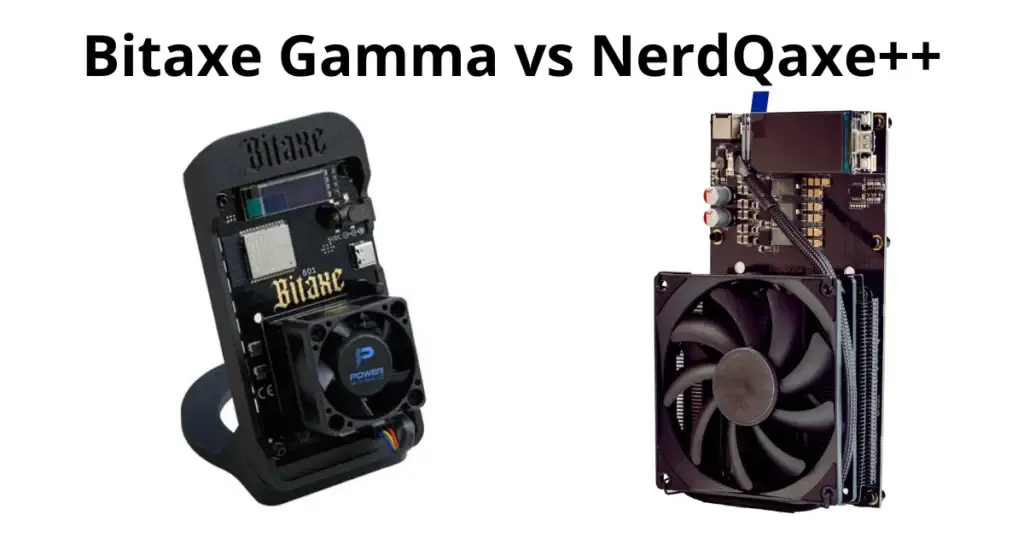
What is the difference between a Bitaxe Gamma and a NerdQaxe++?
The Bitaxe Gamma has one BM1370 chip and delivers approximately 1.1 TH/s at 15 to 20 watts. The NerdQaxe++ has four BM1370 chips and delivers approximately 4.8 TH/s at 60 to 80 watts. The NerdQaxe++ has four times the hashrate, so statistically, it has four times the chance of contributing to a block. Both are open-source, and both are quiet enough for your desk.
Do I need to run my own node to solo mine?
No, you don't need to with parasite.space; the pool handles that. If you want to mine completely sovereign solo (without a pool), you'll need your own Bitcoin node plus software like Public Pool or CKpool hosted yourself. But for beginners, parasite.space is by far the easiest way to start.
{
“@context”: “https://schema.org”,
“@type”: “FAQPage”,
“mainEntity”: [
{
“@type”: “Question”,
“name”: “Is solo mining with a Bitaxe Gamma profitable?”,
“acceptedAnswer”: {
“@type”: “Answer”,
“No, and that shouldn't be your expectation either. With about 1.1 TH/s in a network of 1 zettahash, your chance of finding a block is statistically minimal. Through a pool like parasite space, you get a proportional share of every block found. In practice, we are talking about cents to a few euros a month.”
}
},
{
“@type”: “Question”,
“name”: “How much power does a Bitaxe Gamma use?”,
“acceptedAnswer”: {
“@type”: “Answer”,
“About 15 to 20 watts, depending on how you tune it. That is less than an average old-style LED bulb. Running it 24/7 will cost you roughly 3 to 5 euros a month at Dutch electricity rates.”
}
},
{
“@type”: “Question”,
“name”: “What is the difference between parasite.space and CKpool?”,
“acceptedAnswer”: {
“@type”: “Answer”,
“text”: “CKpool is winner-takes-all: if you find a block, you get everything minus the 2% fee. If you don’t find anything, you get nothing. Parasite splits it: 1 BTC goes to the winner, and the rest (2.125 BTC plus fees) is distributed among all participants based on hashrate. There is no pool fee with Parasite.”
}
},
{
“@type”: “Question”,
“name”: “Can I receive payouts from parasite.space to my own wallet?”,
“acceptedAnswer”: {
“@type”: “Answer”,
“text”: “Yes, payouts are made via Lightning to the bitcoin address you set as your worker name. Use a Lightning-compatible address for which you control the keys, such as one via a hardware wallet or a self-hosted node. Do not use an exchange address.”
}
},
{
“@type”: “Question”,
“name”: “Does parasite.space have pool fees?”,
“acceptedAnswer”: {
“@type”: “Answer”,
“No. Participation is free. The pool operator makes nothing from your shares. The 1 BTC to the block finder plus proportional distribution is the complete model.”
}
},
{
“@type”: “Question”,
“name”: “What is the difference between a Bitaxe Gamma and a NerdQaxe++?”,
“acceptedAnswer”: {
“@type”: “Answer”,
“text”: “The Bitaxe Gamma has one BM1370 chip and achieves approximately 1.1 TH/s at 15 to 20 watts. The NerdQaxe++ has four BM1370 chips and achieves approximately 4.8 TH/s at 60 to 80 watts. The NerdQaxe++ has four times the hashrate, so statistically, it has four times the chance of contributing to a block.”
}
},
{
“@type”: “Question”,
“name”: “Do I need to run my own node to solo mine?”,
“acceptedAnswer”: {
“@type”: “Answer”,
“text”: “No, you don’t need to do that through parasite.space, the pool takes care of it. If you want to mine completely independently (without a pool), you’ll need your own bitcoin node plus software like Public Pool or CKpool, which you host yourself. For beginners, parasite.space is by far the easiest way to get started.”
}
}
]
}